Equal Wedding Planning: A Gender-Neutral Wedding Guide
Last updated: 19 Sept 2026
1510 Views
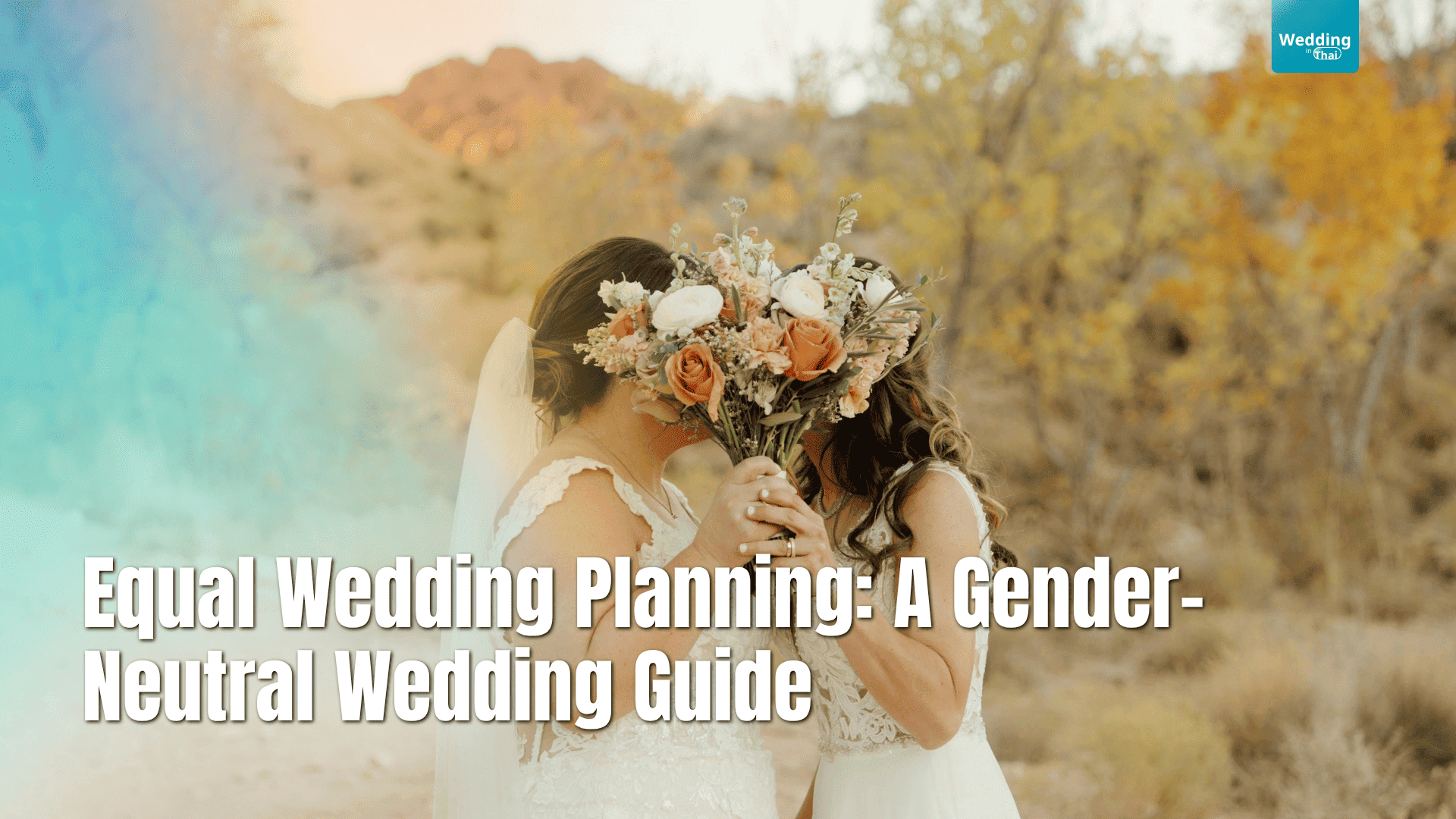
Equal Wedding Planning: A Gender-Neutral Wedding Guide
Wedding traditions have often been built around the roles of a bride and groom. But modern couples are creating celebrations that reflect who they really are, rather than following a fixed set of gender-based expectations.
An equal wedding puts the focus on partnership, shared identity, and the relationship itself. For LGBTQ+ couples and anyone planning a non-traditional wedding, this can mean creating a ceremony and celebration without traditional bride and groom roles.
Whether you are planning a wedding in Thailand or celebrating somewhere else, the most meaningful wedding is one that feels authentic to both of you.
What Is an Equal Wedding?
An equal wedding is a wedding designed around partnership rather than traditional gender roles.
Instead of automatically assigning one person the role of the bride and the other the groom, couples can decide together how they want to walk down the aisle, exchange vows, dress, welcome guests, and celebrate.
There are no rules saying that one person must take the traditional "bride" role while the other takes the "groom" role.
The focus is simply on two people creating a life together.
This approach can be particularly meaningful for LGBTQ+ couples, same-sex couples, non-binary couples, and modern couples who want a more personal and inclusive wedding experience.
1. Start by Defining What "Us" Means
The heart of an equal wedding is your story.
Instead of beginning with traditional wedding roles, start by asking what makes your relationship unique.
Think about:
- How did you meet?
- What brought you together?
- What experiences have shaped your relationship?
- What values do you share?
- What does marriage or commitment mean to you?
- What do you want your guests to remember about the day?
Your answers can influence everything from the ceremony and vows to the music, décor, and reception.
This creates a wedding that tells your story, rather than simply following a traditional wedding template.
2. Plan a Ceremony Without Traditional Gender Roles
A gender-neutral wedding ceremony does not need a traditional bride's side or groom's side.
Instead, couples can design the ceremony around equality and shared participation.
Some ideas include:
- Walking down the aisle together
- Entering from different sides and meeting in the middle
- Sharing symbolic wedding items
- Having gender-neutral wedding parties
- Writing and exchanging personal vows
- Including family and friends in the ceremony
- Giving blessings without separating guests into "bride's side" and "groom's side"
- Creating a ceremony that reflects your cultural or personal traditions
There is no single way to plan an LGBTQ+ or gender-neutral wedding ceremony.
The important thing is that both partners feel equally represented.
3. Choose Wedding Outfits That Reflect Your Identity
One of the easiest ways to make a wedding more personal is to move beyond traditional ideas of what a bride or groom "should" wear.
A gender-neutral wedding gives couples more freedom to choose clothing based on personal style, comfort, and identity.
You might choose:
- A traditional wedding dress
- A tailored suit or tuxedo
- Two dresses
- Two suits
- A combination of formal and contemporary styles
- Matching outfits
- Coordinated colours without identical clothing
- Custom-designed wedding looks
- Traditional Thai clothing or cultural attire
The goal is not necessarily to make both outfits identical.
Instead, many couples choose a shared visual style that connects their looks while allowing each person to express their own identity.
4. Create a Wedding Theme Around Your Relationship
Your wedding theme does not have to come from traditional wedding categories.
Instead, build the atmosphere around something meaningful to both of you.
For example, an equal wedding could be:
- Minimal and modern
- Romantic and elegant
- Tropical and relaxed
- Luxury and sophisticated
- Intimate and personal
- Cinematic and dramatic
- Inspired by travel
- Inspired by your shared interests
- Pride-inspired
You can also bring your story into the reception through music, photographs, videos, performances, or personal speeches.
For couples planning a destination wedding in Thailand, the destination itself can become part of the experience.
A beach ceremony in Phuket, a luxury resort wedding in Koh Samui, or an intimate island celebration in Phi Phi can all be adapted to your relationship and personal style.
5. Use Inclusive Wedding Invitation Wording
Wedding invitations are one of the first opportunities to communicate the atmosphere of your celebration.
Instead of automatically using wording such as "bride and groom," couples can choose language that reflects their relationship.
Examples include:
A Celebration of Our Union
Two Hearts, One Celebration
Join Us as We Begin Our Journey Together
Together With Our Families, We Invite You to Celebrate Our Love
Join Us for the Celebration of Our Marriage
The wording can be romantic, modern, simple, or completely personal.
What matters is that the invitation represents the couple rather than forcing the relationship into traditional gender roles.
6. Choose an LGBTQ+-Friendly and Inclusive Wedding Venue
Choosing the right venue is an important part of planning an LGBTQ+ wedding.
Couples may want to look for venues that are comfortable working with different types of couples and are willing to personalise their wedding experience.
When contacting a venue, consider asking:
- Does the venue host same-sex and LGBTQ+ weddings?
- Can the ceremony be customised?
- Can wedding packages be adapted?
- Can the venue use gender-neutral language?
- Can the wedding party and ceremony format be personalised?
- Can couples choose their own ceremony style?
- Are there restrictions on LGBTQ+ wedding celebrations?
- Can the venue support international couples planning from overseas?
For couples planning a destination wedding in Thailand, choosing a venue that understands international and LGBTQ+ couples can make communication and planning much easier.
7. Make Your Wedding Experience About Both of You
Equality should extend beyond the ceremony.
Think about how both partners can be represented throughout the entire wedding experience.
This can include:
- Equal involvement in planning decisions
- Shared entrances and speeches
- Personalised vows
- Joint cake cutting
- Shared first dance or alternative first-dance formats
- Equal representation in photographs
- Family traditions that include both partners
- Reception activities that do not divide guests by gender
There is no requirement to follow every traditional wedding moment.
You can keep the traditions you love and remove the ones that do not represent you.
Planning an LGBTQ+ Wedding in Thailand
Thailand is an increasingly popular destination for couples looking for a wedding that combines beautiful scenery, hospitality, and a memorable travel experience.
For LGBTQ+ couples planning a destination wedding, the planning process may involve additional questions about venues, ceremony formats, accommodation, guest travel, and local wedding services.
This is why finding the right wedding venue and wedding specialists early can help couples understand their options and create a celebration that feels personal.
From beachfront weddings in Phuket and Koh Samui to intimate island celebrations in Phi Phi, Thailand offers different settings for couples who want a wedding that reflects their relationship rather than traditional gender roles.
An Equal Wedding Is About Choice
An equal wedding is not about rejecting every wedding tradition.
It is about choosing the traditions that feel meaningful and creating new ones when they do not.
You can walk down the aisle together.
You can exchange vows you wrote yourselves.
You can wear whatever reflects your identity.
You can invite your families to celebrate without dividing them into sides.
There is no required formula for an equal or gender-neutral wedding.
The celebration can be traditional, modern, intimate, luxurious, simple, or completely your own.
Because at the heart of the wedding, the most important role is not bride or groom.
It is you and the person you are choosing to build a life with.
Plan Your Wedding in Thailand with WeddingInThai
Planning a destination wedding from overseas can feel overwhelming, especially when you are looking for a venue and wedding team that understands your vision.
WeddingInThai connects couples with carefully selected wedding venues and Wedding Specialists in Thailand, helping you discover options that fit your celebration and connect directly with the right team.
Explore wedding venues in Phuket, Koh Samui, and Phi Phi, and start planning a wedding that feels like you.
Discover. Connect. Plan.


More LGBTQ Content
Discover Your Dream Wedding Venue
Explore our curated collection of hotels, resorts, and wedding venues. Browse wedding packages, photos, and venue details to find the perfect setting for your special day.
Plan Your Wedding with a Wedding Specialist
Share your vision and budget, and our Wedding Specialist will connect you directly with the venue’s wedding team to bring your dream wedding to life.
Related Content

Discover 5 meaningful ways LGBTQ+ couples can support each other through wedding planning, family expectations and destination wedding stress.
17 Nov 2025

In astrology, the four elements Fire, Air, Water, and Earth have long been used to explain compatibility. But for LGBTQ+ couples,
22 Nov 2025

Learn how LGBTQ+ couples can build a safe, supportive relationship and prepare for engagement, wedding planning and married life in Thailand.
19 Nov 2025

