Nine Auspicious Thai Desserts: Meaning, Tradition and How to Prepare the Khan Mak Dessert Tray
Last updated: 17 Jun 2026
1515 Views
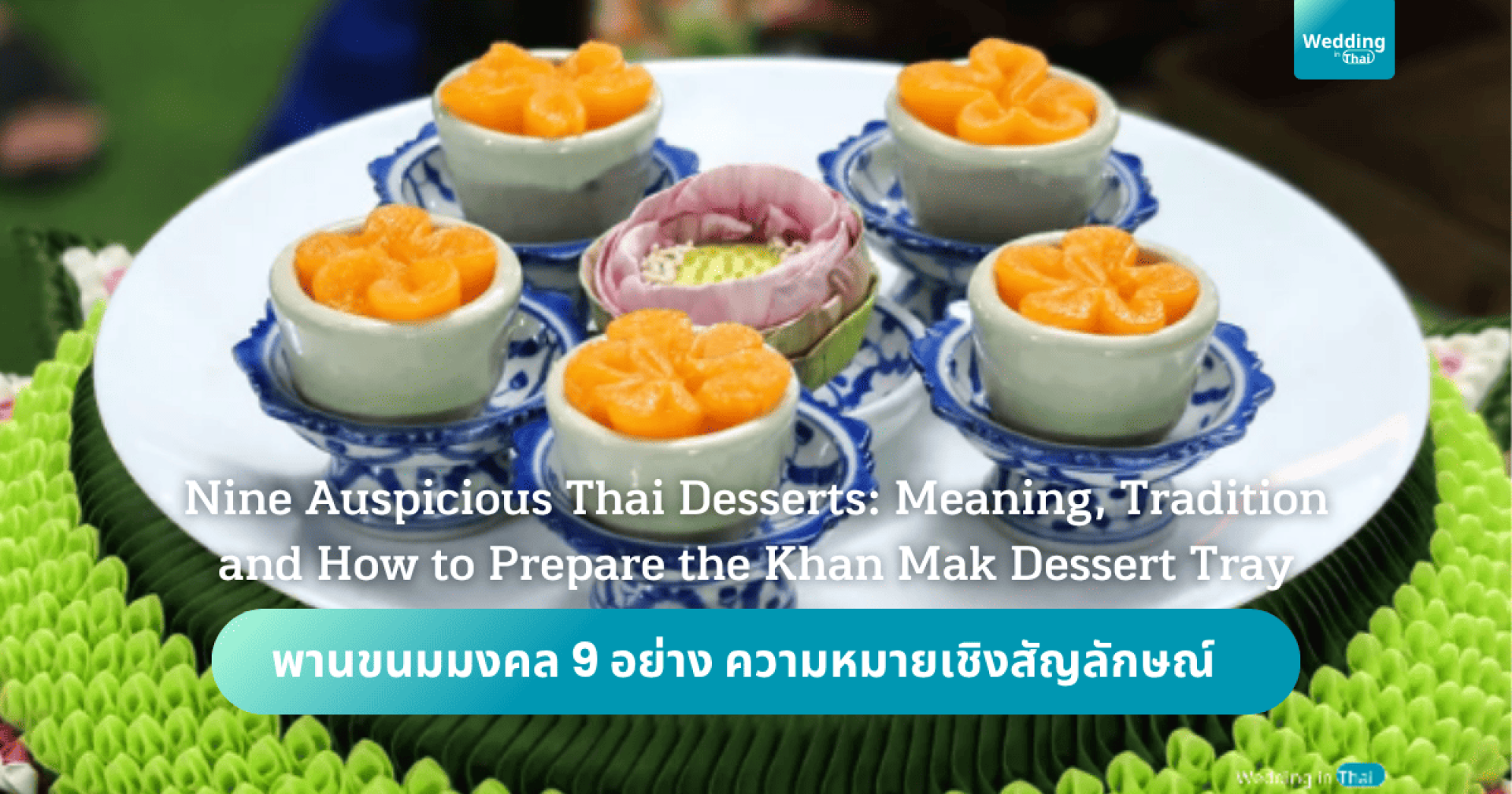
Nine Auspicious Thai Desserts Detailed Guide to the Khan Mak Dessert Tray and Each Dessert’s Meaning
The Khan Mak dessert tray often referred to as the “nine auspicious desserts” is an essential element in Thai engagement and wedding ceremonies. Each dessert carries symbolic meaning: words like “thong” (gold) represent wealth, while other dessert names express wishes for long life, fertility, support, and charm. This comprehensive guide explains the most commonly used nine desserts, their origins, symbolic meanings, practical preparation tips, tray arrangement, and regional variations. (Note: exact lists vary by locale and custom; the following selection reflects the most commonly cited items).
The Nine Desserts and Their Symbolic Meanings
Below are nine common auspicious desserts frequently included in the Khan Mak dessert tray, with short descriptions and symbolic meanings.
- Thong Yip Golden Flower
Made from egg yolks and syrup, shaped into a small flower-like mound.
Meaning: The word “yip” (to pick up) implies “to receive” — a blessing for wealth and prosperity that can be “picked up” or easily attained.
- Thong Yod Golden Drops
Egg-yolk dough dropped into boiling syrup to form small golden droplets.
Meaning: Symbolizes a continuous flow of wealth, like drops of gold.
- Foi Thong / Foy Thong Golden Threads
Thin threads of egg yolk cooked in syrup and formed into delicate bundles.
Meaning: Represents longevity and lasting love — long life together.
- Thong Ek / Dara Thong The Prime Golden Dessert
An intricately shaped golden dessert often decorated with edible gold leaf or sesame seeds.
Meaning: “Ek” and “Dara” connote being first, excellent or prominent — a wish for career success, status, and recognition.
- Met Khanun / Met Khanoon Jackfruit Seed-Shaped Sweet
Green-bean paste shaped like jackfruit seeds and coated with egg yolk.
Meaning: Implies support and helpful backing in life and career — having people to support personal growth.
- Khanom Chan Layered Dessert
Multi-layered dessert made from tapioca or rice flour and coconut milk.
Meaning: Layers symbolize advancement and promotion — a blessing for steady progress and success.
- Khanom Thuay Fu Fluffy Cup Cake (Thai style)
Light, puffy dessert with bright colors (origin influenced by Chinese traditions).
Meaning: “Fufong” symbolizes prosperity and blossoming success.
- Saneh Chan / Sampannee Charm or Lovely Sweets
Small round or molded sweets that suggest charm and appeal.eaning: Blessing for the couple to be beloved and to attract goodwill and affection.
- Look Chup or Local VariantMiniature Fruit-shaped Marzipan or Regional Treat
Look Chup are mung-bean paste shaped into tiny fruits and glazed; other regions use local fried or baked treats such as khanom kong.
Meaning: Symbolizes care, attention to detail, and abundance — depending on the local variant, meaning can shift toward fertility or completeness.
Note: Different sources and regions sometimes use other desserts (e.g., Thong Krajang, Khai Wan variations). The essential idea is to include sweets whose names or forms carry auspicious meanings such as prosperity, longevity, support, and charm.
Short History & Origins
The “thong” family of desserts is associated with gold because their golden color derives from egg yolks and tradition placed high symbolic value on gold as wealth. Some desserts have roots in royal cuisine or Chinese culinary influence (e.g., Khanom Thuay Fu). Over time, these sweets became standardized as “auspicious desserts” used in ceremonies to wish prosperity, fertility, and long life.
Preparation Checklist & Timeline
Must-haves before the event
- Final dessert list and piece counts
- Ceremonial trays or decorative plates
- Decorative cloths, leaves, gold leaf (if used)
- Packing and transport materials for fragile items
- Assigned people to carry trays in the Khan Mak procession
- Ceremony script and schedule
Arrangement tips
- Place the most symbolic desserts (e.g., dowry-like items and thong-family sweets) prominently.
- Use decorative fabric or flowers around trays.
- Separate ceremonial/offerings tray (incense/candles) from edible trays for convenience.
How the Dessert Trays are Used in the Khan Mak Ceremony
- Procession: Dessert trays are carried in the Khan Mak procession from the groom’s home to the bride’s home.
- Arrival & Presentation: Trays are presented to the bride’s elders for inspection and acceptance.
- Offering & Blessing: Some trays may be used for blessings or later distributed to guests as tokens.
- Storage & Distribution: Delicate sweets may be served shortly after the ceremony or packaged as favors.
Choosing a Confectioner & Storage Tips
- Pick vendors experienced with auspicious desserts for ceremonies and request photos of past work.
- Time deliveries to preserve freshness; many egg-yolk sweets are best made or delivered the same day.
- Use cushioned packaging and keep damp-sensitive sweets protected from humidity and heat.
Sample Presentation Script
“On behalf of the groom’s family, we present these auspicious desserts and offerings as a sign of sincere intention and blessings for a prosperous, loving life together.”
(The bride’s family receives and replies with blessing.)
The Khan Mak dessert tray is a cultural vessel of blessing: each sweet is a wish in edible form for wealth, longevity, support, charm, and prosperity. Understanding the meaning behind each dessert helps make the engagement and wedding ceremony richer in symbolism and more meaningful for families and guests alike.
Related Content

Learn how to register a marriage in Thailand, required documents, steps, and legal process for Thai and foreign couples.
23 Jun 2024

The Unity Candle Ceremony uses candlelight to symbolize two lives joining as one. This guide explains the meaning, history
17 Nov 2025

Wedding in Thai is here to share the beautiful symbolism of the wedding cake. Ever wondered why cutting the cake is such an important
5 Jul 2024

