9 Auspicious Thai Desserts for Weddings: Meanings & Traditions
Last updated: 12 Oct 2026
2953 Views
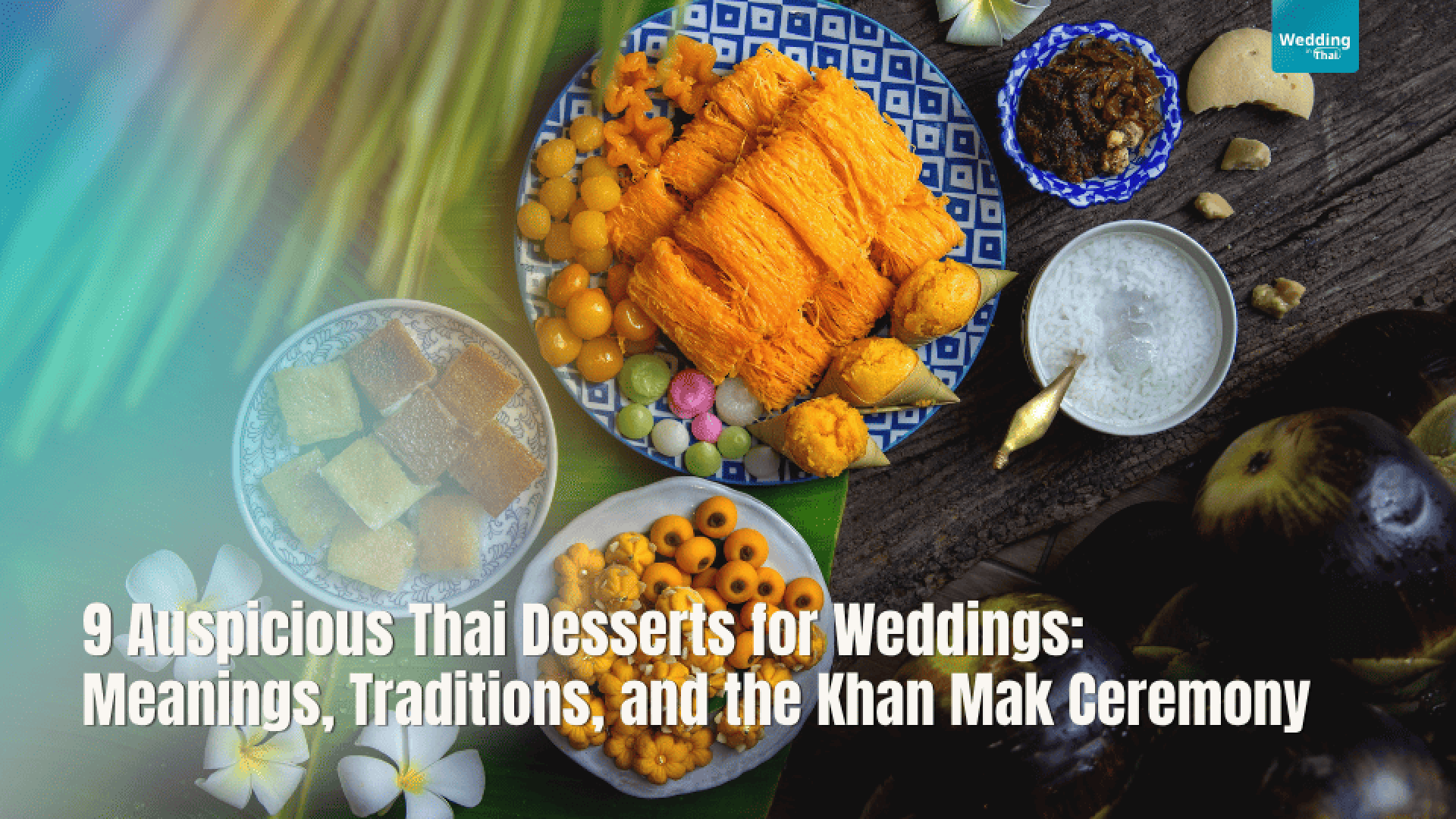
9 Auspicious Thai Desserts for Weddings: Meanings, Traditions, and the Khan Mak Ceremony
Thai weddings are rich in cultural traditions, meaningful rituals, and symbolic offerings. One of the most recognizable elements of a traditional Thai engagement ceremony is the Khan Mak procession, in which the groom's family brings ceremonial offerings to the bride's family.
Among these offerings, auspicious Thai desserts hold a special place. Known for their beautiful appearance, delicate preparation, and symbolic meanings, these traditional sweets represent wishes for prosperity, happiness, longevity, and a harmonious married life.
But what do the nine auspicious Thai desserts mean, and why are they associated with weddings?
In this guide, WeddingInThai explores nine traditional Thai sweets commonly associated with auspicious occasions, their symbolic meanings, and how they may be incorporated into a Thai engagement or wedding ceremony.
An important cultural note: The selection of auspicious desserts varies by family, region, and local tradition. The nine desserts described below are a practical guide, not a fixed list required for every Thai wedding.
What Are the Nine Auspicious Thai Desserts?
The nine auspicious Thai desserts, commonly referred to as Khanom Mongkhon, are traditional sweets associated with good fortune and positive wishes.
In Thai culture, the word thong means gold. Several famous Thai desserts contain this word in their names, reflecting associations with wealth, prosperity, and abundance.
Other sweets carry symbolic meanings through their names, shapes, or traditional interpretations. For example, Khanom Chan is associated with advancement, while Foi Thong is often linked to longevity and lasting relationships.
These desserts may be served during auspicious occasions, given as gifts, or incorporated into traditional engagement ceremonies, depending on family preferences and regional customs.
Although the phrase nine auspicious desserts is widely used, the exact selection is not universal. Couples should consult their families or ceremony planner when following a specific local tradition.
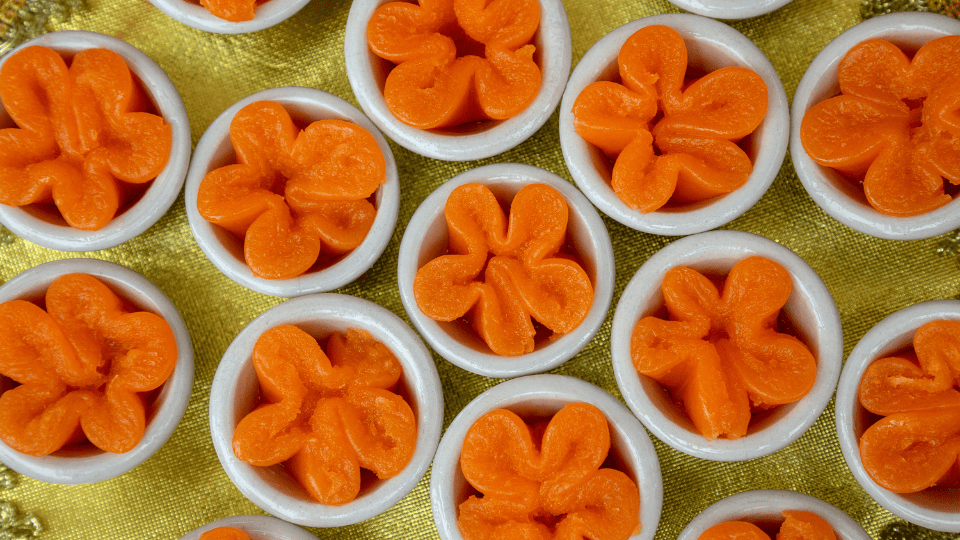
1. Thong Yip: Golden Flower Sweet
Thai name: ทองหยิบ
Symbolic meaning: Wealth, prosperity, and good fortune.
Thong Yip is a traditional Thai sweet made primarily from egg yolks and sugar syrup. The cooked mixture is carefully shaped into a flower-like form, giving the dessert its distinctive appearance.
Its name combines thong, meaning gold, with yip, meaning to pick up. This is traditionally interpreted as a wish for wealth and prosperity that can be acquired and enjoyed.
At a Thai engagement ceremony, Thong Yip represents hopes for financial stability and a prosperous future for the couple.
Wedding significance: A symbolic wish for a household filled with abundance, opportunity, and good fortune.
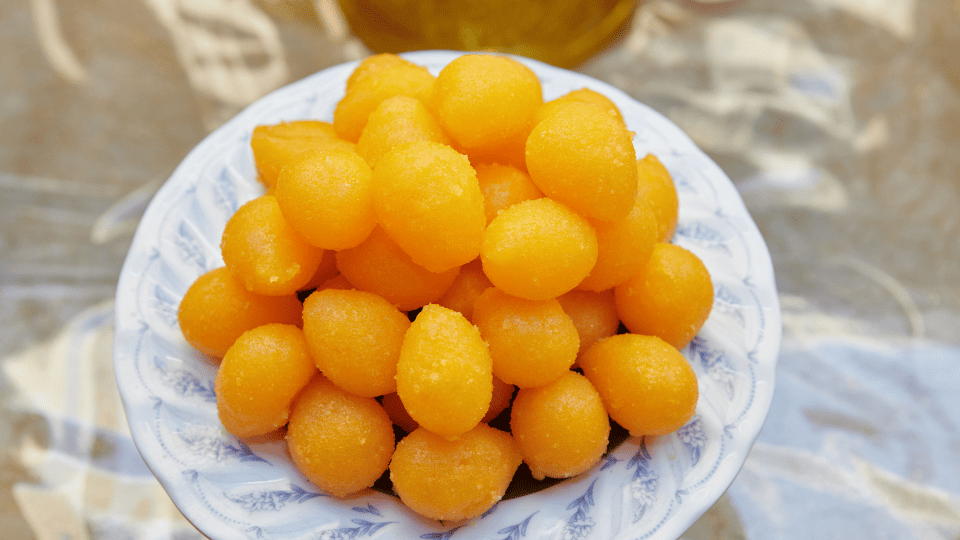
2. Thong Yod: Golden Drops
Thai name: ทองหยอด
Symbolic meaning: Continuous wealth and abundance.
Thong Yod consists of small, rounded golden sweets made from egg yolks, sugar, and syrup. The mixture is dropped into hot syrup during preparation, creating the dessert's characteristic shape.
The name is associated with golden drops, symbolizing a continuing flow of wealth and prosperity.
For couples beginning their married life together, Thong Yod represents the hope that financial security and good fortune will continue throughout their lives.
Wedding significance: A blessing for lasting prosperity and abundance.
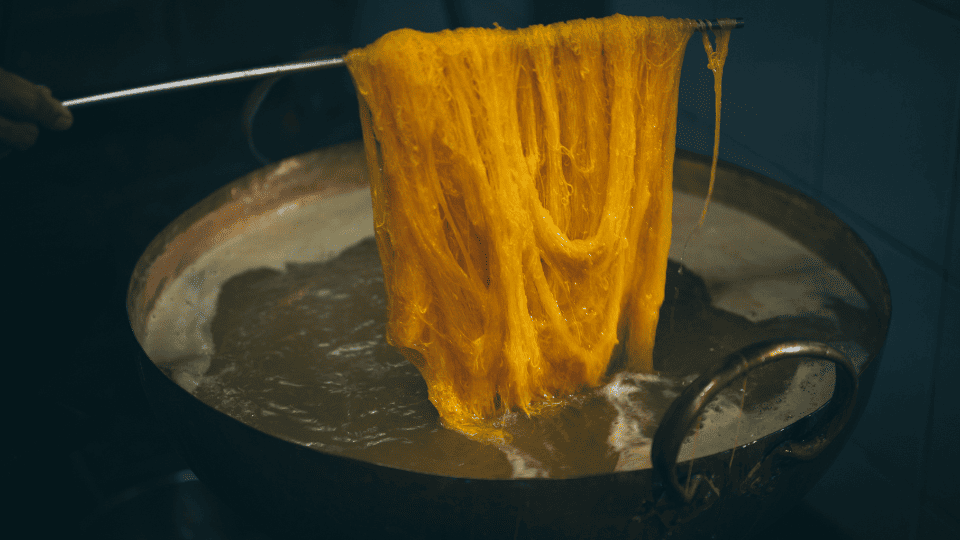
3. Foi Thong: Golden Threads
Thai name: ฝอยทอง
Symbolic meaning: Longevity, continuity, and lasting love.
Foi Thong is made by pouring thin streams of egg-yolk mixture into hot sugar syrup. The resulting golden strands are gathered into delicate bundles.
Its long, thread-like appearance has traditionally been associated with continuity and longevity. At weddings, it can symbolize the wish that a couple's love and relationship will endure over time.
Foi Thong is also one of Thailand's most recognizable traditional sweets and is frequently associated with auspicious celebrations.
Wedding significance: A wish for a long, happy marriage and a lasting bond between two families.
4. Thong Ek: Golden Excellence
Thai name: ทองเอก
Symbolic meaning: Success, distinction, and achievement.
Thong Ek is a traditional Thai sweet known for its rich flavor and carefully molded appearance. It is commonly made using egg yolks, sugar, and coconut milk, with variations in preparation.
The word ek can mean first or principal. This association gives the dessert a symbolic connection with excellence, distinction, and achievement.
Thong Ek is often regarded as an elegant sweet for auspicious occasions because of its detailed craftsmanship and golden appearance.
Wedding significance: A wish for success, recognition, and a bright future for the couple.
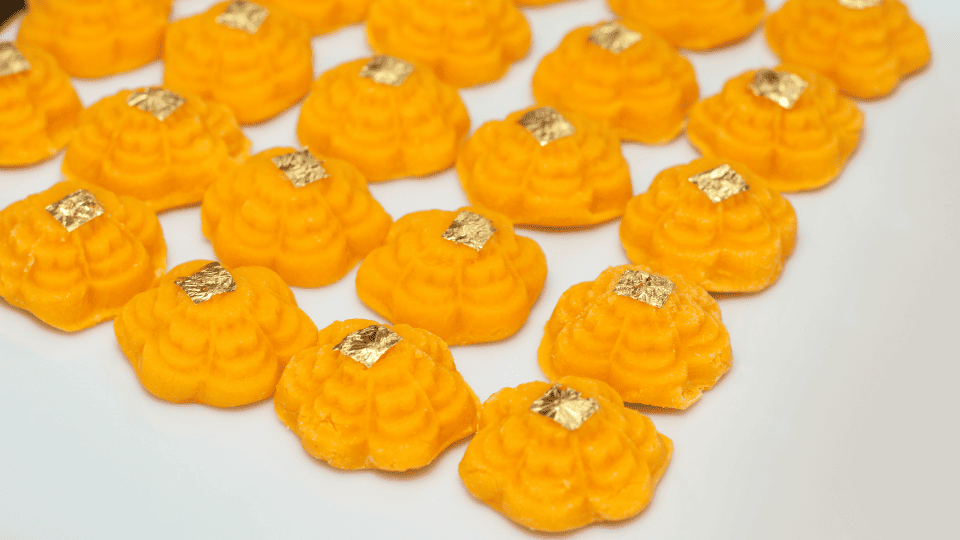
5. Med Khanun: Jackfruit Seed Sweet
Thai name: เม็ดขนุน
Symbolic meaning: Support, encouragement, and continued success.
Med Khanun is made from a sweet mung bean paste shaped to resemble jackfruit seeds and coated with egg yolk.
Its name refers to jackfruit seeds, but its auspicious interpretation comes from the word khanun, which is associated with support or being supported in Thai wordplay and traditional beliefs.
The dessert therefore represents the wish that the couple will receive encouragement, assistance, and goodwill from the people around them.
Wedding significance: A blessing for a supportive family life and success in shared endeavors.
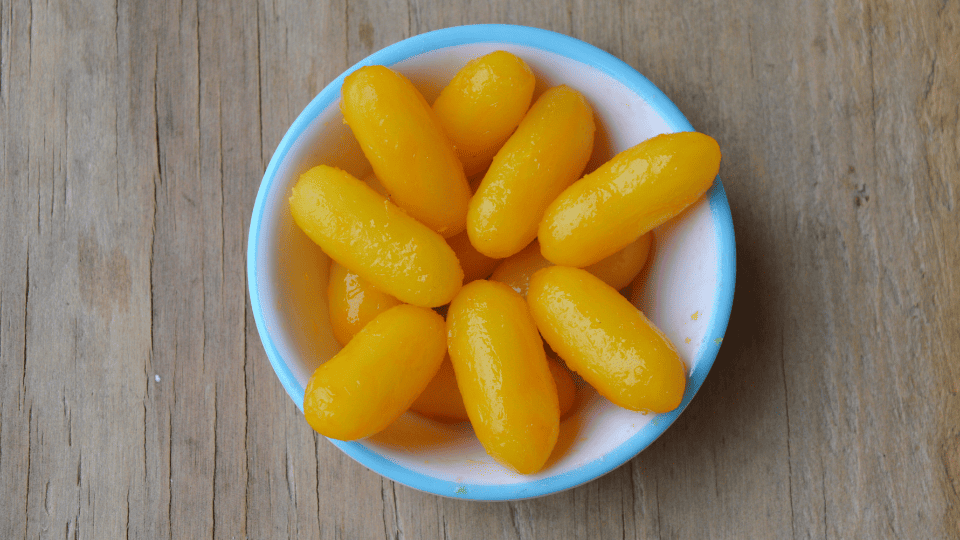
6. Khanom Chan: Layered Thai Dessert
Thai name: ขนมชั้น
Symbolic meaning: Progress, advancement, and growth.
Khanom Chan is a layered Thai dessert traditionally made from starches, sugar, and coconut milk. It is known for its soft texture and distinctive layers.
The word chan means layer or level. The dessert is commonly associated with moving upward, advancing in life, and achieving greater success.
Its layered structure makes it a meaningful addition to celebrations where families wish for progress and prosperity.
Wedding significance: A wish for the couple to grow together, achieve their goals, and build a successful future.
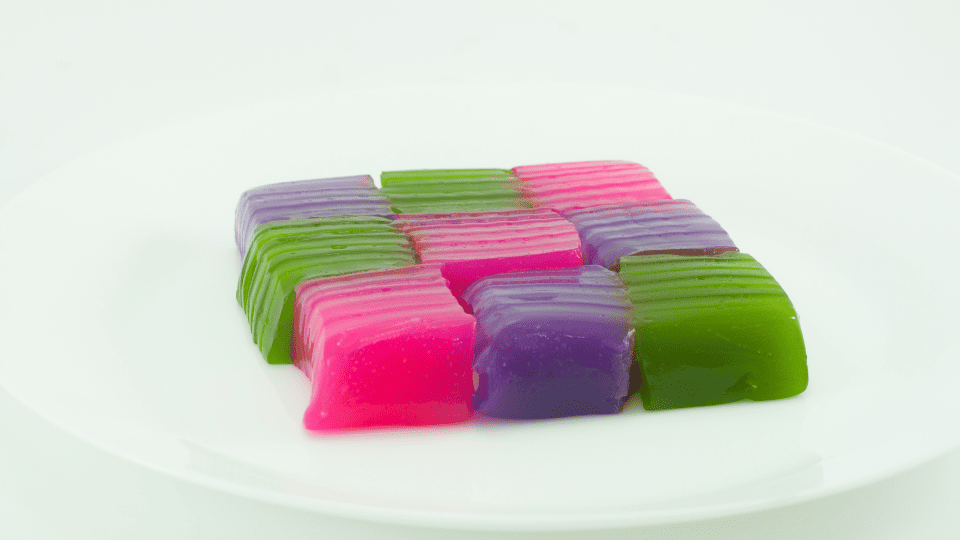
7. Khanom Thuai Fu: Fluffy Prosperity Cake
Thai name: ขนมถ้วยฟู
Symbolic meaning: Growth, flourishing, and prosperity.
Khanom Thuai Fu is a soft, steamed Thai sweet with a light texture and a characteristically expanded surface.
The Thai word fu is associated with rising, swelling, or flourishing. This has led to the dessert's traditional association with prosperity and upward progress.
It is commonly found among sweets served at auspicious occasions, although it is not necessarily included in every selection of nine wedding desserts.
Wedding significance: A wish for a flourishing marriage, growing happiness, and success in the couple's life together.
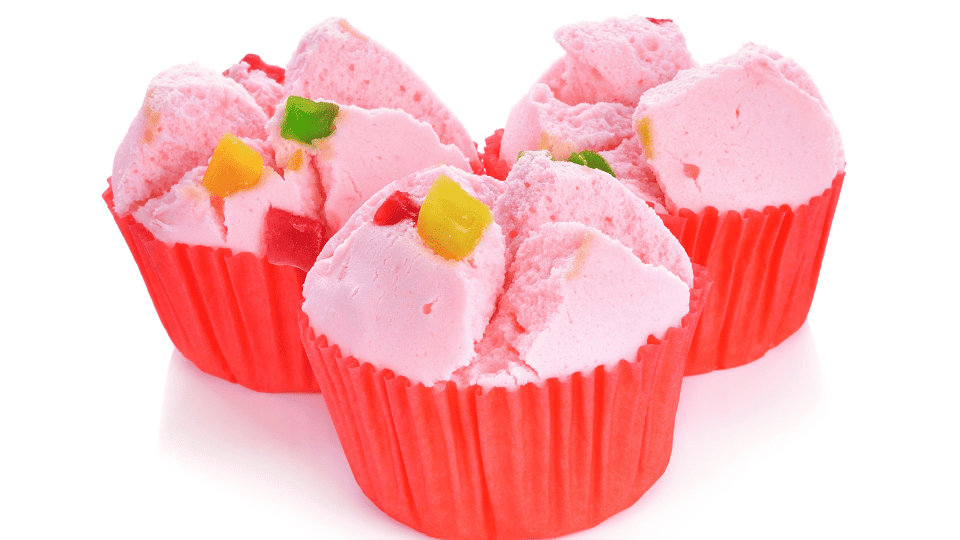
8. Saneh Chan: The Sweet of Charm
Thai name: เสน่ห์จันทน์
Symbolic meaning: Affection, charm, and being well-liked.
Saneh Chan is a traditional Thai sweet known for its distinctive shape and fragrant flavor. Its name is associated with saneh, meaning charm or attraction.
The dessert's symbolic meaning centers on affection, goodwill, and the ability to inspire positive feelings in others.
It is associated with auspicious occasions and may be included in collections of traditional Thai sweets.
Wedding significance: A wish for the couple to be surrounded by love, kindness, and harmonious relationships.
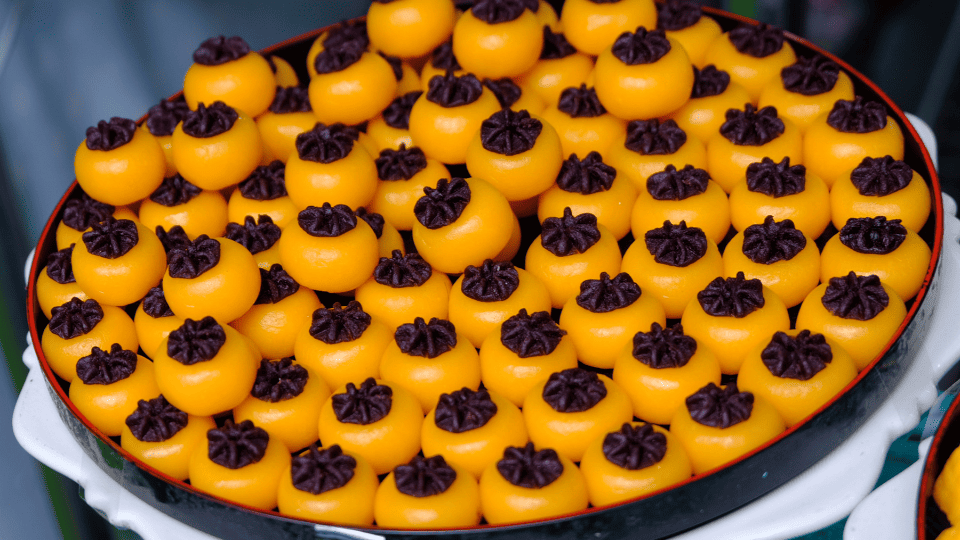
9. Thong Chomphu Nut (ทองชมพูนุท)
Meaning: Prosperity, Good Fortune, and a Bright Future
Thong Chomphu Nut is a traditional Thai sweet associated with auspicious occasions. Its name evokes the beauty and value of gold, making it a fitting choice for celebrations that wish to welcome prosperity and good fortune.
When included in a wedding dessert selection, it can represent the couple’s hopes for a bright future, happiness, and a prosperous life together.
As Thai auspicious dessert selections can vary by region and family tradition, couples may wish to confirm the dessert’s name and meaning with their chosen Thai dessert maker.
The History and Cultural Significance of Auspicious Thai Desserts
Thai auspicious desserts reflect the importance of food, family, and symbolic wishes in traditional Thai culture.
Many well-known Thai sweets use egg yolks and sugar syrup, producing their characteristic golden color. This is particularly significant for desserts whose names contain thong, or gold, because gold is associated with wealth and prosperity.
Thai dessert traditions have also developed through cultural exchange and the evolution of royal and regional culinary practices. The history of individual sweets can differ, so it is important not to assume that all nine desserts originated from a single ceremony or historical period.
Over time, auspicious desserts have become associated with weddings, engagement ceremonies, religious occasions, and other important milestones.
For couples planning a traditional Thai wedding, these sweets offer a way to incorporate cultural symbolism into the celebration while sharing an important part of Thai heritage with family members and international guests.
How Are Thai Wedding Desserts Used in the Khan Mak Ceremony?
The Khan Mak procession is an important part of many traditional Thai engagement ceremonies.
During this procession, members of the groom's family carry symbolic offerings to the bride's family. These may include betel trays, flowers, fruits, desserts, and other items determined by family custom.
Auspicious desserts can be included among these offerings.
1. Preparing the Dessert Trays
The families or wedding planner coordinate the dessert selection, quantities, and presentation before the ceremony.
Some families prefer a traditional selection of auspicious sweets, while others choose a combination that reflects their own customs.
2. Carrying the Offerings in the Khan Mak Procession
The groom's family carries the prepared offerings to the bride's home or the designated ceremony venue.
Depending on the ceremony, the dessert trays may be carried alongside other symbolic offerings.
3. Presenting the Offerings to the Bride's Family
The offerings are presented to the bride's family as part of the engagement rituals.
The exact order of presentation and the role of individual trays vary according to the family's traditions and the ceremony's format.
4. Serving or Sharing the Desserts
After the ceremony, the desserts may be served to family members and guests or distributed as gifts.
Some families also prepare separate dessert arrangements for display, serving, or guest favors.
For international couples: The Khan Mak ceremony can be adapted to suit a destination wedding in Thailand. Discuss the meaning of each offering with your wedding planner so that the ceremony feels authentic and meaningful to both families.
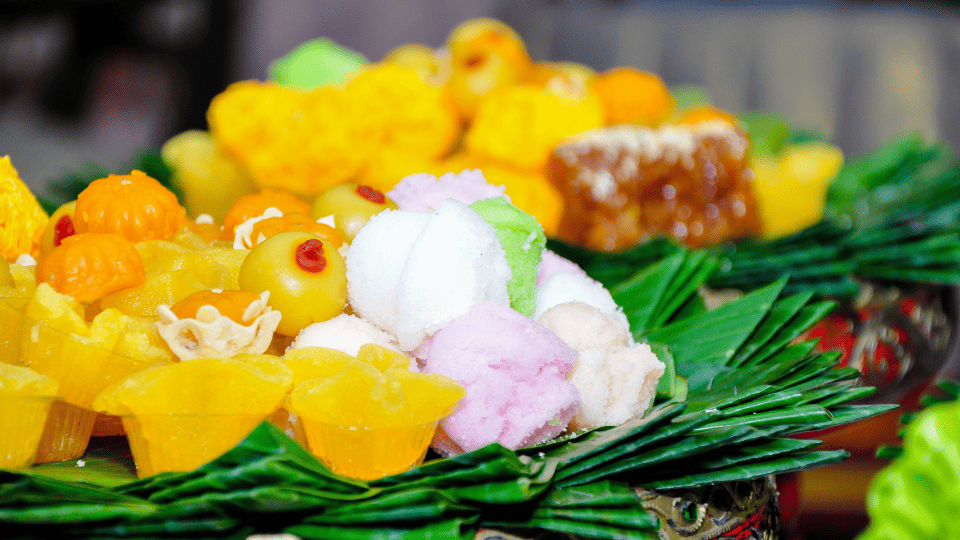
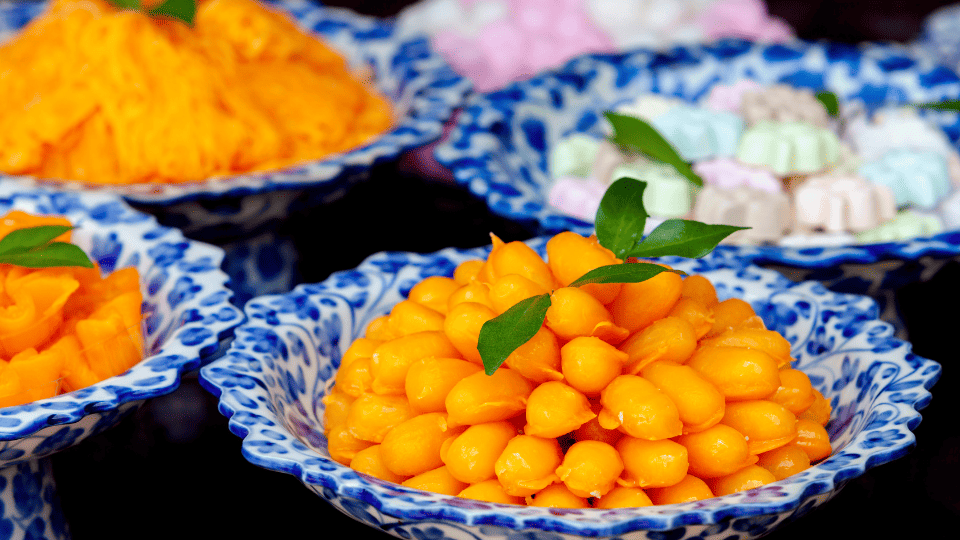
How to Prepare an Auspicious Thai Dessert Tray for Your Wedding
If you plan to include auspicious Thai desserts in your engagement ceremony, the following checklist can help you organize the details.
Before the Wedding
- Confirm the dessert selection with both families.
- Decide how many pieces of each dessert are required.
- Confirm whether the desserts are intended for ceremonial presentation, guest service, or both.
- Choose trays that complement the ceremony's overall style.
- Coordinate the dessert presentation with the Khan Mak procession.
- Arrange suitable packaging and transportation.
- Confirm delivery and setup times with the confectioner.
Dessert Tray Styling Tips
- Choose a cohesive presentation. Gold, cream, and traditional Thai decorative details can complement the desserts' symbolic meanings.
- Keep the desserts visible. Arrange each type so guests can appreciate its shape and craftsmanship.
- Coordinate with the ceremony design. Select trays and decorative elements that complement the flowers, fabrics, and other Khan Mak offerings.
- Separate ceremonial and serving arrangements when necessary. This can make the ceremony easier to manage and help preserve the presentation of the desserts.
For luxury destination weddings, a carefully styled dessert display can also become part of the wedding's visual storytelling, especially when traditional Thai details are incorporated into a contemporary celebration.
Choosing a Thai Dessert Vendor for Your Wedding
The quality and presentation of traditional Thai sweets can make a meaningful difference to the ceremony.
When selecting a confectioner, consider the following:
- Experience with Thai wedding ceremonies: Choose a vendor familiar with auspicious desserts and Khan Mak arrangements.
- Traditional preparation: Ask about the ingredients, preparation methods, and variations available.
- Presentation quality: Request photographs of previous dessert trays and ceremonial displays.
- Freshness: Confirm when the desserts will be prepared and delivered.
- Transportation: Discuss packaging, temperature, humidity, and protection during delivery.
- Customization: Ask whether the vendor can accommodate specific family traditions, quantities, or presentation preferences.
Egg-yolk sweets and other delicate desserts may require careful handling, particularly in Thailand's warm and humid climate.
For outdoor weddings or destination celebrations, coordinate delivery with the venue and wedding planner to help preserve the desserts' appearance until the ceremony begins.
Frequently Asked Questions About Thai Wedding Desserts
What are the nine auspicious Thai desserts?
The nine auspicious Thai desserts are traditional sweets associated with good fortune and positive wishes. Commonly discussed examples include Thong Yip, Thong Yod, Foi Thong, Thong Ek, Med Khanun, Khanom Chan, Khanom Thuai Fu, and Saneh Chan. The ninth dessert varies according to the list, family tradition, and regional custom.
There is no single selection that every Thai family must follow.
Why are Thai desserts used in wedding ceremonies?
Auspicious Thai desserts represent wishes for prosperity, longevity, success, support, and happiness. Their names, shapes, and colors often carry symbolic meanings that families wish to share with the couple.
What does the word Thong mean in Thai desserts?
Thong means gold in Thai. In the names of traditional sweets such as Thong Yip, Thong Yod, and Foi Thong, it is associated with wealth, prosperity, and abundance.
Must every Thai wedding include nine auspicious desserts?
No. The selection depends on the family's preferences, regional traditions, and the type of ceremony. Some couples include auspicious desserts as part of their Khan Mak offerings, while others incorporate them into a dessert table or reception.
Can international couples include Thai auspicious desserts in a destination wedding?
Yes. International couples can incorporate traditional Thai desserts into an engagement ceremony, wedding reception, or cultural experience in Thailand.
A wedding planner or confectioner familiar with Thai traditions can help explain the symbolism and recommend a suitable selection.
When should Thai wedding desserts be prepared?
Preparation and delivery depend on the type of dessert. Many delicate sweets are best prepared close to the event, but timing should be confirmed with the confectioner. Dessert trays should be protected from excessive heat, moisture, and direct sunlight.
Are Khan Mak desserts and wedding reception desserts the same?
Not necessarily. Khan Mak desserts are associated with the engagement procession and its ceremonial offerings. Reception desserts are generally selected for serving guests. Some sweets may be used for both purposes, but the arrangements and quantities can differ.
Bringing Thai Traditions into Your Wedding in Thailand
Thai wedding traditions offer couples a meaningful way to connect their celebration with local culture.
From the Khan Mak procession to auspicious desserts, each detail can reflect a family's hopes for the couple's future. Understanding these traditions helps couples make informed decisions about their ceremony and create an experience that feels personal, respectful, and memorable.
For couples planning a destination wedding in Thailand, the right combination of cultural elements, venue, and wedding professionals can help bring their vision to life.
Planning your wedding in Thailand?
Discover wedding venues and connect with wedding professionals through WeddingInThai to explore possibilities for your celebration.

Discover Your Dream Wedding Venue
Explore our curated collection of hotels, resorts, and wedding venues. Browse wedding packages, photos, and venue details to find the perfect setting for your special day.
Plan Your Wedding with a Wedding Specialist
Share your vision and budget, and our Wedding Specialist will connect you directly with the venue’s wedding team to bring your dream wedding to life.
Related Content

Dear soon-to-be brides and grooms, have you ever felt how music has the power to make every moment even more magical? The songs you choose
27 Jan 2025

Plan your dream wedding in Thailand with ease. Discover wedding venues, destination wedding packages, and expert planning for Singapore couples.
4 Jul 2026

Plan a riverside wedding in Thailand with practical tips on venues, weather, décor, attire, food, photography and destination wedding planning.
14 Mar 2025

