Thai Khan Mak: Items, Meanings & Engagement Traditions
Last updated: 29 Oct 2026
4903 Views
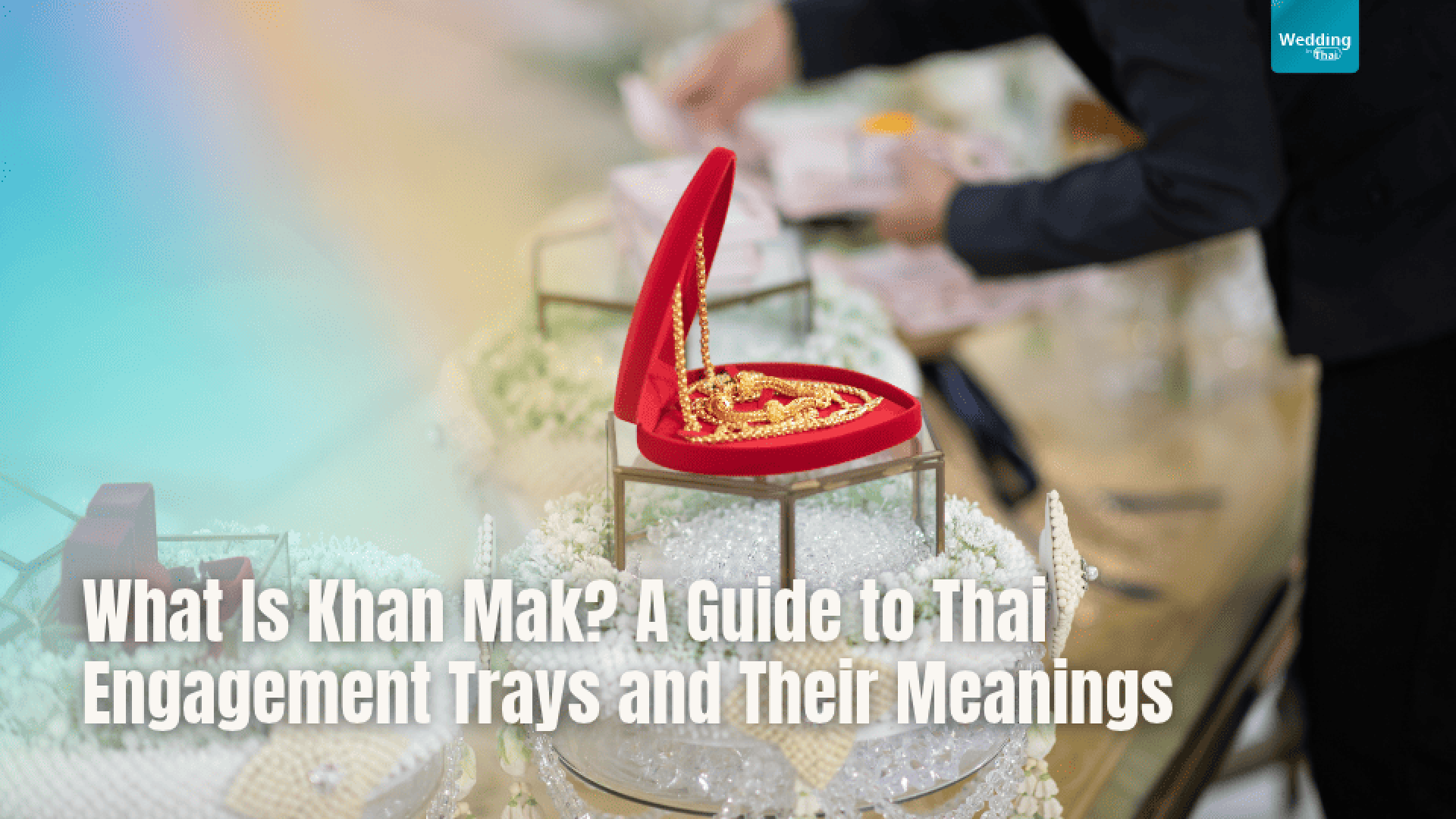
What Is Khan Mak? A Guide to Thai Engagement Trays and Their Meanings
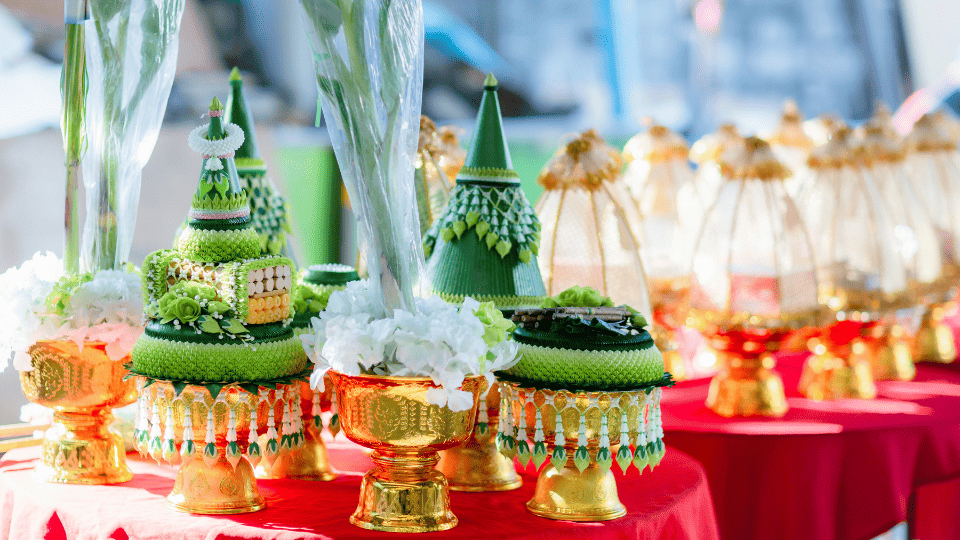
A traditional Thai engagement ceremony is filled with meaningful rituals, symbolic offerings, and family blessings. One of its most recognizable elements is the Khan Mak procession, in which the groom's family carries ceremonial trays to the bride's family as part of the engagement tradition.
Known in Thai as ขันหมาก, Khan Mak refers to the ceremonial trays and offerings prepared for the procession. Depending on family customs and the style of the ceremony, these may include engagement gifts, gold, betel nuts and leaves, auspicious Thai desserts, fruits, flowers, and other traditional offerings.
Each item can represent a wish for prosperity, happiness, harmony, and a successful married life. However, there is no single fixed list of Khan Mak items followed by every Thai family. The arrangements may differ according to regional traditions, religious backgrounds, family preferences, and whether the ceremony follows traditional or contemporary practices.
For couples planning a wedding in Thailand, understanding the meaning behind Khan Mak offers a deeper appreciation of Thai culture and helps make the engagement ceremony more personal and meaningful.
What Is Khan Mak in a Thai Engagement Ceremony?
Khan Mak is an important part of traditional Thai engagement and wedding customs. The procession typically involves members of the groom's family carrying ceremonial trays to the bride's home or the chosen ceremony venue.
The offerings are presented to the bride's family as part of the formal engagement proceedings. In many ceremonies, the procession is followed by family introductions, a formal request for the bride's hand in marriage, the presentation or acknowledgment of engagement offerings, and other rituals agreed upon by both families.
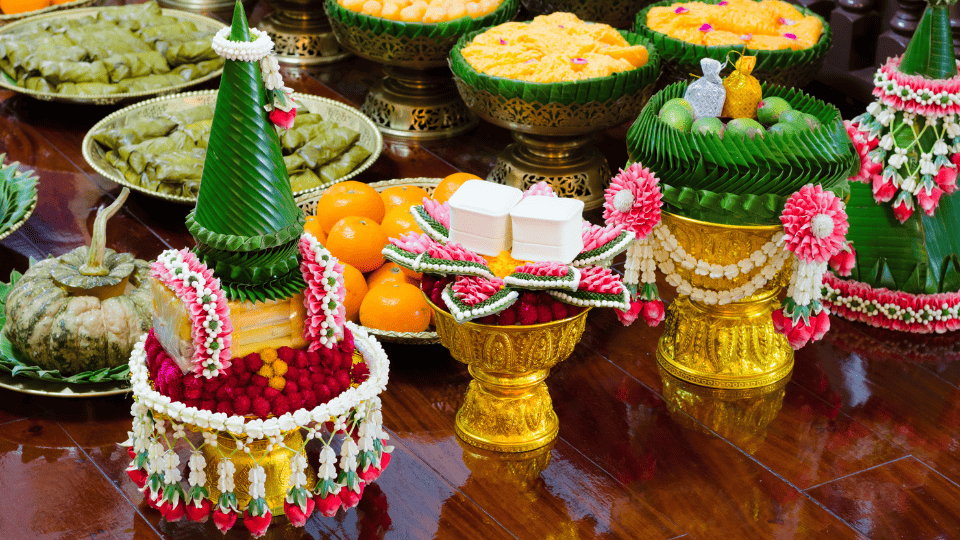
One of the most distinctive features is the use of decorated trays arranged with symbolic items. Their colors, flowers, fruits, and traditional sweets contribute to the beauty of the ceremony while reflecting wishes for the couple's future.
Although Khan Mak is associated with Thai Buddhist wedding traditions, engagement customs are not identical across Thailand. Couples should discuss the ceremony with both families to determine which rituals are appropriate for their backgrounds and beliefs.
Traditional Khan Mak Items and Their Meanings
The items included in a Khan Mak procession depend on the family's traditions and the agreed ceremony format. The following are common examples, rather than a mandatory checklist for every engagement.
1. Sin Sod: The Traditional Thai Dowry
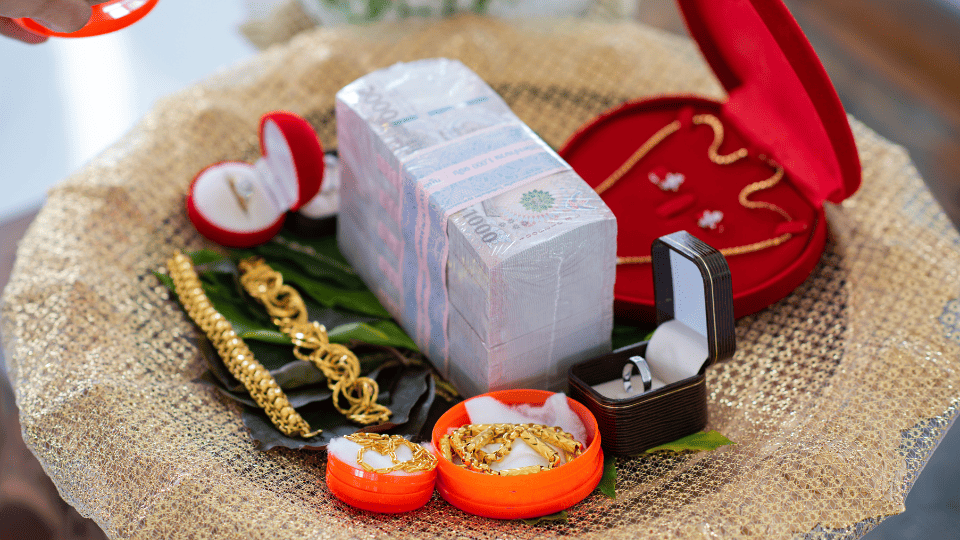
Sin Sod (สินสอด) is a traditional financial offering associated with Thai engagement and marriage customs. It may consist of cash, gold, or other valuables, depending on the agreement between the families.
What does Sin Sod symbolize?
Sin Sod is commonly associated with financial responsibility, family honor, and the couple's readiness to begin married life. Its meaning and expectations can vary considerably between families.
Sin Sod should not be understood as the purchase of a bride. In contemporary Thai weddings, the amount and presentation are matters for the couple and their families to discuss and agree upon.
Planning tip: Couples should clarify in advance what will be presented, how it will be displayed, and whether the items are intended for ceremonial display, family keeping, or another arrangement.
2. Engagement Ring and Gold
Gold jewelry and an engagement ring may be presented as part of the engagement ceremony. Gold is valued in Thai culture as a precious material and can also represent prosperity and financial security.
The engagement ring symbolizes the couple's commitment to one another, although the exact timing of the ring exchange varies according to the ceremony.
Some families display the ring and gold on a dedicated tray, while others incorporate them into the main engagement offerings.
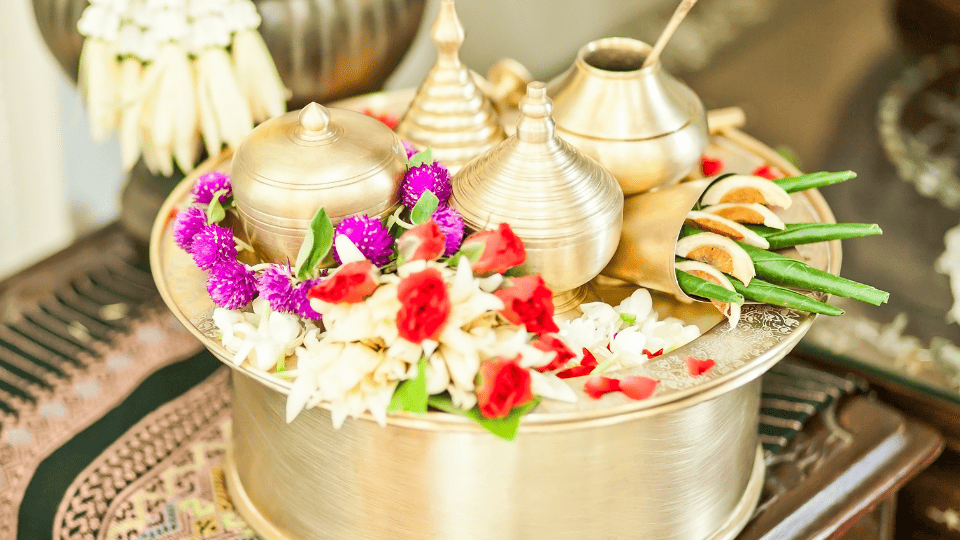
3. Betel Nuts and Betel Leaves (Mak Phlu)
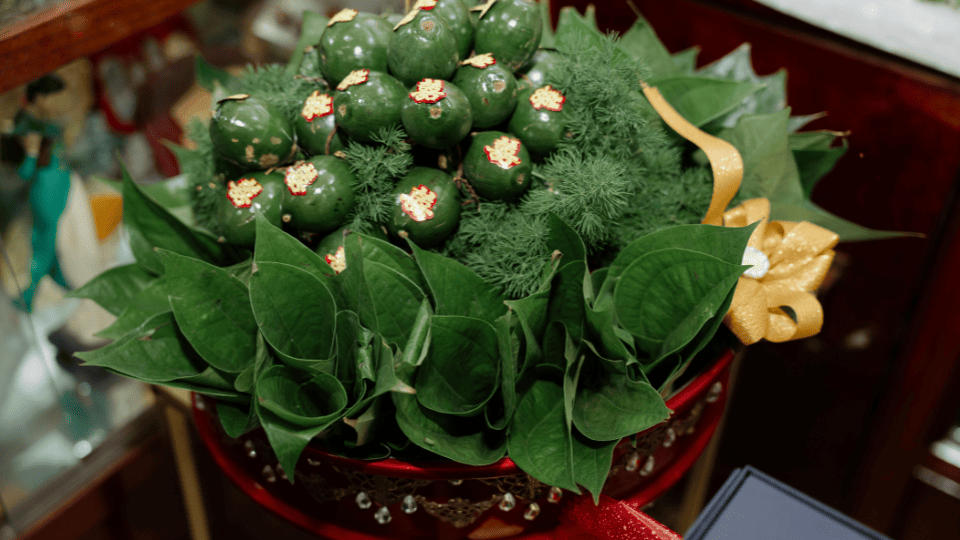
Betel nuts and leaves, known as Mak Phlu (หมากพลู), have a long history in Thai social and ceremonial customs.
A traditional betel set may contain betel nuts, betel leaves, and decorative floral arrangements. Additional components depend on local customs.
What do they symbolize?
The betel set reflects traditional hospitality, respect, and the continuation of cultural practices. Its presence connects the engagement ceremony with older Thai customs in which betel was used in social and formal occasions.
Not every modern engagement ceremony includes a betel set, so couples should confirm whether it is expected by their families.
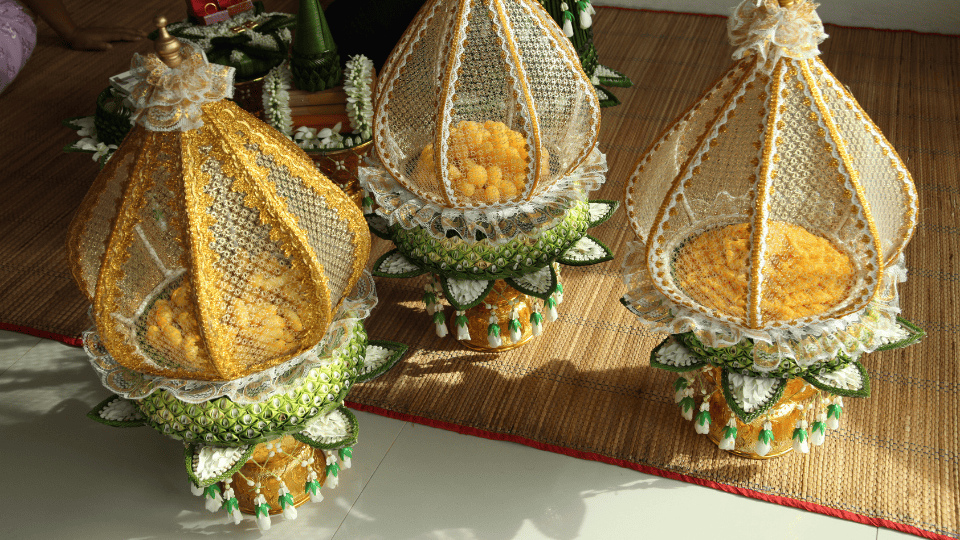
4. Auspicious Thai Desserts (Khanom Mongkhon)
Traditional Thai desserts, particularly those known as Khanom Mongkhon (ขนมมงคล), are popular in many engagement and wedding celebrations.
Their names, appearance, and ingredients often carry auspicious associations. Common examples include:
Thong Yip (ทองหยิบ)
A golden dessert associated with wealth and prosperity.
Thong Yod (ทองหยอด)
Another golden sweet traditionally linked with abundance and financial good fortune.
Foi Thong (ฝอยทอง)
Fine golden strands associated with continuity and lasting good fortune. The dessert is also commonly connected with wishes for enduring relationships.
Med Khanun (เม็ดขนุน)
A sweet whose name evokes the idea of support and encouragement, symbolizing the hope that the couple will receive help and support throughout married life. Other traditional sweets may be included according to family preferences.
Why are these desserts used?
Their auspicious names and golden appearance make them suitable for celebrations that express wishes for happiness, prosperity, and a positive future.
The number and selection of desserts are not universal. Some families prepare a specific assortment, while others choose a smaller selection that suits their ceremony.
5. Auspicious Fruits
Fruit trays may form part of the Khan Mak procession or be presented as additional ceremonial offerings.
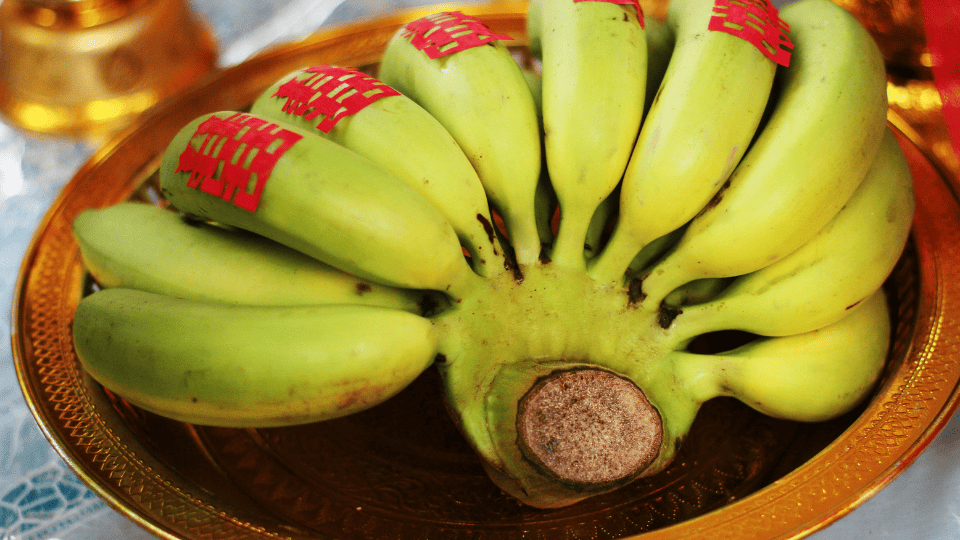
Depending on the family's customs, examples may include bananas, oranges, coconuts, pomegranates, and other seasonal fruits.
Their symbolic interpretations can vary, but common associations include:
- Bananas: Abundance and continuity, with interpretations influenced by local customs.
- Oranges: Good fortune and prosperity in some cultural traditions.
- Coconuts: A valued fruit that may be included in traditional offerings.
- Pomegranates: Abundance and fertility in some cultural interpretations.
These associations should not be treated as universal rules. The specific fruits and their meanings may differ from one family or region to another.
6. Incense and Candles
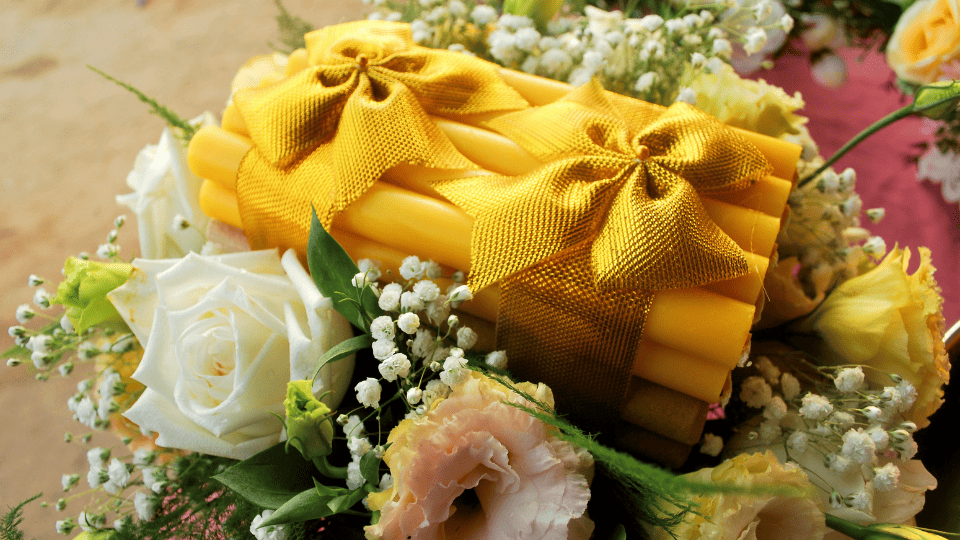
Incense and candles may be prepared for religious offerings or blessing rituals when these are part of the ceremony. In Thai Buddhist settings, they can be used when paying respects to the Buddha or participating in other appropriate religious observances.
Their significance depends on the ritual in which they are used. They are not necessarily a standard component of every Khan Mak tray.
Couples should consult their families or ceremony organizer about whether incense and candles are required and how they should be prepared.
7. Floral Arrangements and Garlands
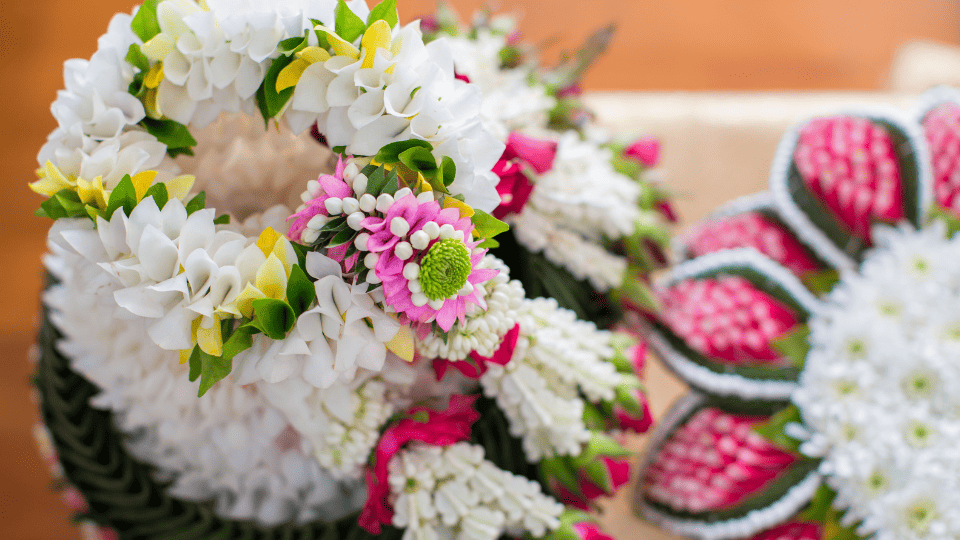
Flowers are an important decorative element in many Thai engagement ceremonies. Fresh flowers may be arranged on trays, used to decorate ceremonial offerings, or presented as garlands to parents and elders.
Flowers contribute beauty and elegance to the ceremony and may symbolize respect, affection, purity, and auspicious beginnings.
Garlands presented to parents or elders can also express gratitude and respect, depending on the family's chosen rituals.
For a contemporary wedding, couples can coordinate the flowers with their ceremony palette while retaining elements that are meaningful to their families.
8. Traditional Perfumed Water
Scented water and traditional Thai fragrances may be used in certain Thai ceremonial or blessing practices.
Their use depends on the particular ritual and family tradition. They should not automatically be considered a required Khan Mak item.
Couples planning a ceremony that includes scented water should confirm its purpose and preparation with their family elders or cultural ceremony organizer.
9. Sai Sin: Sacred White Thread
Sai Sin (สายสิญจน์) is a white thread used in various Thai Buddhist religious ceremonies and blessing rituals.
When included in a wedding ceremony, it may form part of a ritual led by monks or elders, depending on the family's religious customs.
Sai Sin is associated with blessings and spiritual protection within the context of the ritual. However, it is not necessarily carried as a standard tray in every Khan Mak procession.
Couples should distinguish between the offerings carried during the procession and the items prepared separately for religious or blessing ceremonies.

10. Gifts and Additional Family Offerings
Some families include additional gifts or symbolic offerings as part of their engagement arrangements.
These may include clothing, jewelry, or other items agreed upon by the families. The selection depends on personal preferences and local customs rather than a universal list.
For contemporary ceremonies, couples may choose to simplify the offerings or include personalized gifts that reflect their relationship and family traditions.
The most important consideration is that both families understand and agree on the purpose of each item.
What Are the Silver and Gold Gates in a Khan Mak Procession?
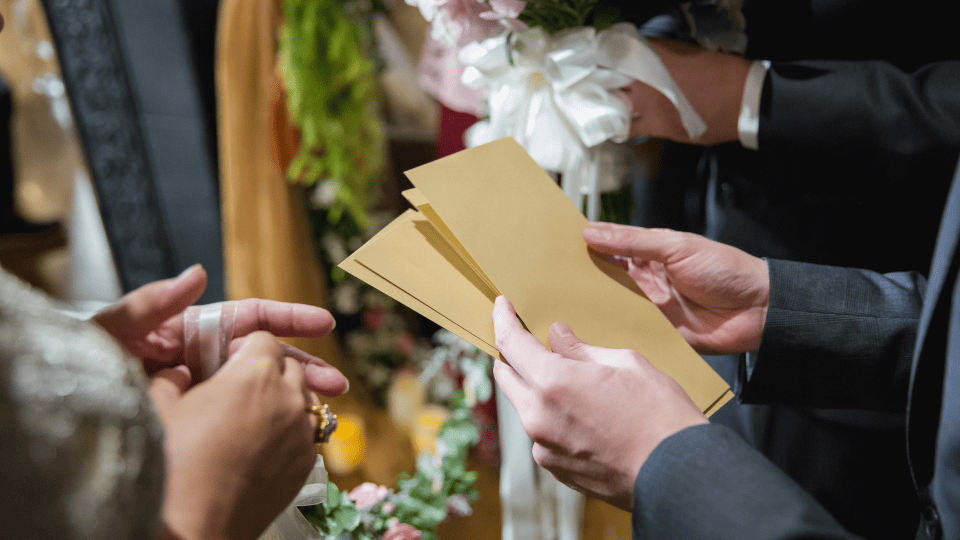
One of the most memorable parts of a traditional Khan Mak procession is the use of symbolic gates, commonly called Pratu Ngern Pratu Thong (ประตูเงินประตูทอง).
These gates are usually formed by members of the bride's family or other participants who hold a barrier, such as a ribbon or chain, across the procession's path.
The groom and his party may be asked to answer questions, participate in playful challenges, or offer symbolic gifts before being allowed to proceed.
The interactions create a lively atmosphere and give both families an opportunity to celebrate together.
The gates are often interpreted as a playful test of the groom's determination and sincerity. However, the details are flexible and depend on the families involved. Some ceremonies include several gates, while others use only one or omit the tradition entirely.
For couples who want a modern engagement, the gate activities can be adapted to suit the venue, guest list, and preferred level of formality.
How Does a Traditional Khan Mak Ceremony Work?
The sequence of a Thai engagement ceremony varies according to family customs, religious practices, and the program agreed upon by both sides. A typical arrangement may include the following stages.
Step 1: Prepare the Khan Mak Trays
The families agree on the ceremonial offerings, engagement gifts, and other items to be presented.
The trays are then arranged and decorated before the ceremony. Depending on the number of offerings, family members, friends, or hired attendants may help carry them.
Step 2: Begin the Khan Mak Procession
The groom's procession travels to the bride's home or the designated ceremony location. Participants carry the prepared trays, often accompanied by music or other celebratory elements, depending on the family's tradition.
The procession is both a ceremonial presentation and an opportunity for family members to take part in the celebration.
Step 3: Pass Through the Silver and Gold Gates
If the families choose to include the gate tradition, the groom and his party stop at the designated barriers.
They may take part in playful exchanges or challenges before continuing to the ceremony area.
The number of gates and the activities involved are flexible.
Step 4: Formal Engagement Request
The families participate in a formal discussion or presentation concerning the engagement.
In Thai ceremonies, the formal request for the bride's hand may be referred to as Soo Kor (สู่ขอ). The precise sequence and terminology can vary by family and ceremony format.
The groom's representatives may present the agreed offerings to the bride's family.
Step 5: Acknowledge the Engagement Offerings
The families acknowledge the engagement gifts and other agreed items.
Where Sin Sod is included, its presentation and any related family arrangements should follow the agreement made before the ceremony.
The display and handling of the offerings are matters for the families to determine together.
Step 6: Exchange Engagement Rings
If an engagement ring exchange is part of the program, the couple exchanges or presents their rings according to the agreed ceremony sequence.
This is often an important moment for photographs and family participation.
Step 7: Receive Family Blessings
The couple may pay respects to their parents and elders and receive their blessings.
Some families incorporate additional religious or cultural rituals, such as a Buddhist blessing or other family-specific observances.
These rituals should be planned separately when necessary, as not every blessing practice is part of the Khan Mak procession itself.
Step 8: Photography and Celebration
After the formal rituals, the couple and their families may take photographs and continue with refreshments, a meal, or the next part of the wedding celebration.
The program can be adapted to suit the venue, guest count, and overall wedding schedule.
Regional Differences in Khan Mak Traditions
Thai engagement customs are not identical throughout the country.
Families may have different expectations regarding the procession, the number of trays, the types of offerings, and the sequence of rituals.
Local customs, religious backgrounds, and family preferences all influence how the ceremony is organized.
In some families, a traditional procession with numerous decorated trays is an essential part of the engagement. Others prefer a smaller ceremony with only a few selected offerings.
Thai Muslim families and other cultural communities may follow different engagement and marriage traditions. Their practices should be understood within their own cultural and religious contexts rather than treated as variations of a single standard ceremony.
For international couples marrying in Thailand, the best approach is to discuss the ceremony with both families and work with a planner or ceremony specialist who understands the relevant traditions.
How to Prepare for a Khan Mak Ceremony
Planning a Khan Mak procession involves more than arranging beautiful trays. Coordinating the offerings, family roles, timing, and venue setup can help the ceremony run smoothly.
Use this checklist as a starting point.
1. Confirm the family's traditions
Discuss which rituals are important to each family and whether the ceremony will follow a traditional, simplified, or contemporary format.
2. Agree on Sin Sod and engagement gifts
Confirm what will be presented, how it will be displayed, and any arrangements concerning the gifts after the ceremony.
3. Finalize the Khan Mak items
Create a list of the required trays and offerings. Confirm the quantities and presentation style with the family elders or ceremony organizer.
4. Arrange the trays and decorations
Decide whether the family will prepare the trays or hire a specialist vendor. Coordinate flowers, fabrics, and decorative details with the overall wedding design.
5. Assign procession roles
Confirm who will carry each tray, who will lead the procession, and who will coordinate the activities at the silver and gold gates if they are included.
6. Confirm the ceremony venue and timing
Check the available space, procession route, ceremony start time, and any restrictions imposed by the venue.
7. Coordinate photography and videography
Identify important moments to capture, including the procession, tray presentation, engagement ring exchange, and family blessings.
8. Prepare a final checklist
Check that all offerings, rings, gifts, and ceremonial items are ready before the procession begins.
A clear schedule and an agreed list of responsibilities can help prevent last-minute confusion.
Can You Have a Modern Khan Mak Ceremony?
Yes. Many couples adapt traditional engagement ceremonies to suit their preferences, schedules, and wedding venues.
A contemporary Khan Mak ceremony may use fewer trays, simpler decorations, or a more compact procession while retaining the customs that matter most to the families.
Couples may also coordinate the ceremonial trays with a modern wedding theme, using carefully selected flowers, refined color palettes, and elegant presentation.
However, the best way to simplify the ceremony is to agree on the changes with both families in advance. This helps preserve the significance of the traditions while allowing the celebration to reflect the couple's personality.
For destination weddings, venue layout and guest logistics may also influence the procession. A hotel ballroom, private villa, or beachfront venue may require a different setup from a traditional family home.
Frequently Asked Questions About Thai Khan Mak
What is Khan Mak in a Thai wedding?
Khan Mak is the traditional procession of ceremonial trays and offerings associated with Thai engagement customs. The groom's family typically brings the offerings to the bride's family as part of the formal engagement proceedings.
What items are included in a Khan Mak procession?
Common examples include engagement gifts, cash or gold associated with Sin Sod, a betel set, auspicious Thai desserts, fruits, and floral arrangements. The exact items vary by family, region, and ceremony format.
What is the difference between Khan Mak and Sin Sod?
Khan Mak refers to the ceremonial trays and offerings used in the procession. Sin Sod is the traditional financial offering associated with Thai engagement and marriage customs. Sin Sod may be presented as part of the ceremony, but the two terms do not mean the same thing.
Why are Thai desserts included in Khan Mak?
Traditional auspicious desserts are included because their names, colors, and cultural associations express wishes for prosperity, abundance, happiness, and a positive future for the couple.
What are the silver and gold gates in a Thai engagement ceremony?
Silver and gold gates are symbolic barriers used during some Khan Mak processions. Members of the bride's family may invite the groom to complete playful challenges before allowing the procession to continue.
Is Khan Mak required for every Thai wedding?
No. Whether a Khan Mak procession is included depends on the couple's preferences, family expectations, and cultural or religious traditions. Some couples choose a traditional procession, while others prefer a simplified engagement ceremony.
Can international couples include Khan Mak in a destination wedding in Thailand?
Yes. International couples can incorporate Khan Mak into their celebration if it suits their preferences and the families involved. It is advisable to work with a wedding planner or ceremony specialist who understands Thai engagement traditions and can explain the rituals to international guests.
How much does a Khan Mak ceremony cost?
The cost depends on the selected offerings, gold or engagement gifts, tray decorations, floral arrangements, attire, and whether a specialist vendor is hired. There is no single standard price because each family may choose a different ceremony format and set of offerings.
Celebrate Thai Engagement Traditions with Meaning
Khan Mak is more than a beautiful procession of decorated trays. It brings together family customs, symbolic offerings, and the shared hopes of two families as a couple prepares to begin married life.
From the presentation of Sin Sod and engagement rings to traditional Thai desserts, betel sets, and the playful silver and gold gates, each element can contribute to a ceremony that feels personal and culturally meaningful.
For couples planning a wedding in Thailand, learning about Khan Mak is a valuable first step toward understanding the traditions behind the celebration.
The most meaningful ceremony is one that respects the families involved, reflects the couple's wishes, and preserves the customs that matter most to them.

Discover Your Dream Wedding Venue
Explore our curated collection of hotels, resorts, and wedding venues. Browse wedding packages, photos, and venue details to find the perfect setting for your special day.
Plan Your Wedding with a Wedding Specialist
Share your vision and budget, and our Wedding Specialist will connect you directly with the venue’s wedding team to bring your dream wedding to life.
Related Content
Explore 7 destination wedding themes from beach to luxury styles, with ideas to match the perfect wedding venue in Thailand
13 Apr 2026

Wedding budgets can vary greatly depending on factors such as the size of the event, venue, decorations, guest count, catering
28 Jan 2025

Wedding in Thai brings you the beautiful symbolism behind the champagne pourwhy its such a treasured part of wedding celebrations.
28 Jan 2025

