Holy Water and Sai Sin in Thai Wedding Ceremonies
Last updated: 24 Oct 2026
3076 Views
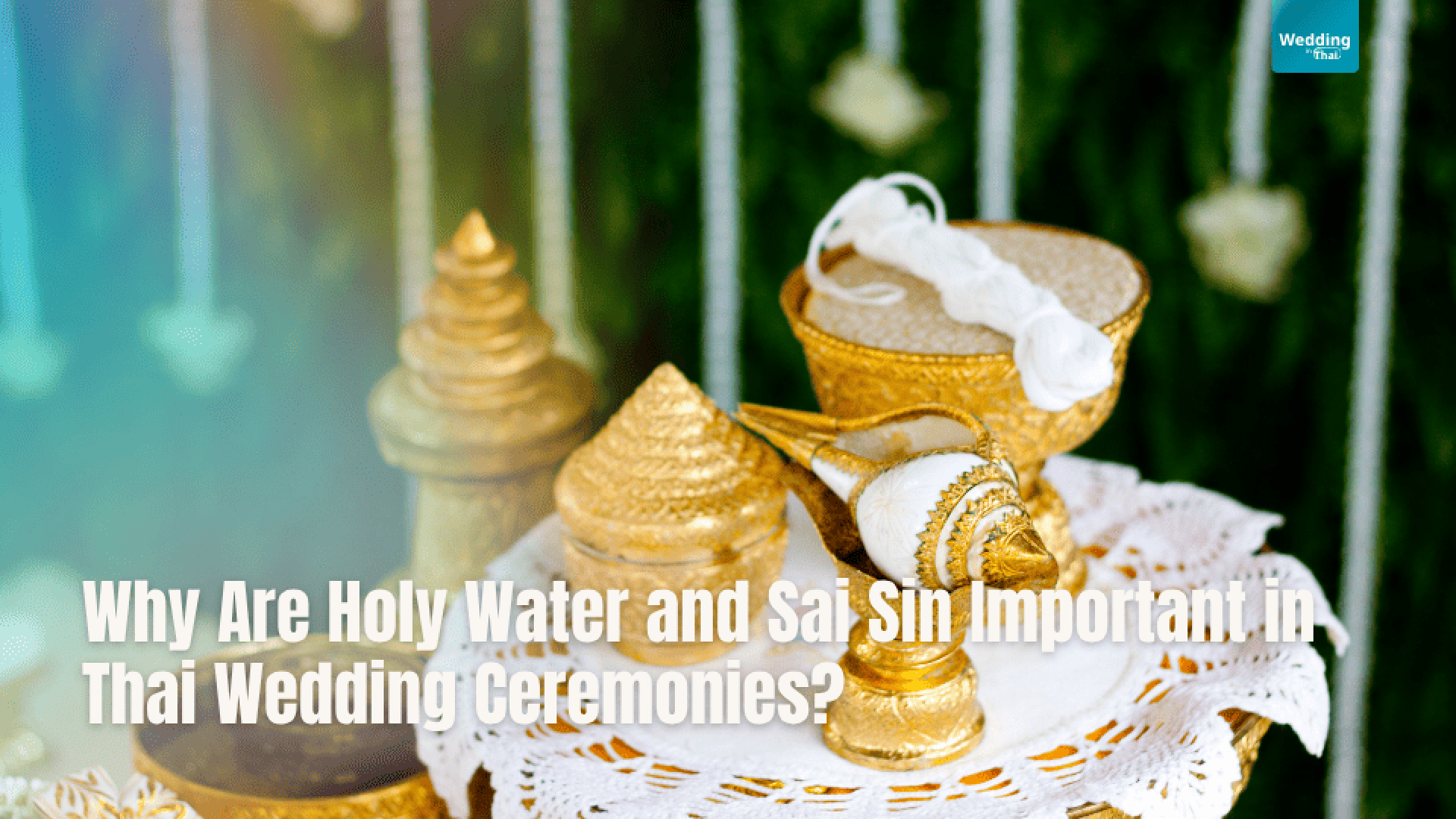
Why Are Holy Water and Sai Sin Important in Thai Wedding Ceremonies?
Holy water and Sai Sin, or sacred white thread, are traditional elements associated with Buddhist blessings and auspicious ceremonies in Thailand. In Thai wedding traditions, holy water symbolizes blessings and auspicious beginnings, while Sai Sin is used in religious ceremonies and represents the sacred connections established through Buddhist rituals.
For couples planning a traditional Thai wedding, understanding the meaning of holy water and Sai Sin can help them decide which ceremonial elements to include in their wedding day. These traditions reflect religious beliefs, family values, and the wish for a happy and prosperous married life.
Although practices vary between families and regions, both elements remain meaningful parts of Thai cultural and religious traditions.
1. What Is Holy Water in a Thai Wedding Ceremony?
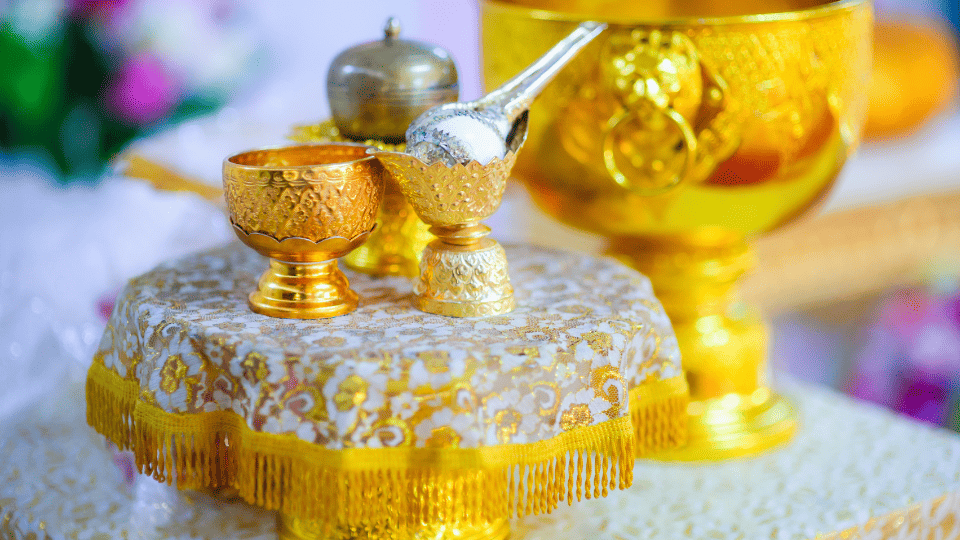
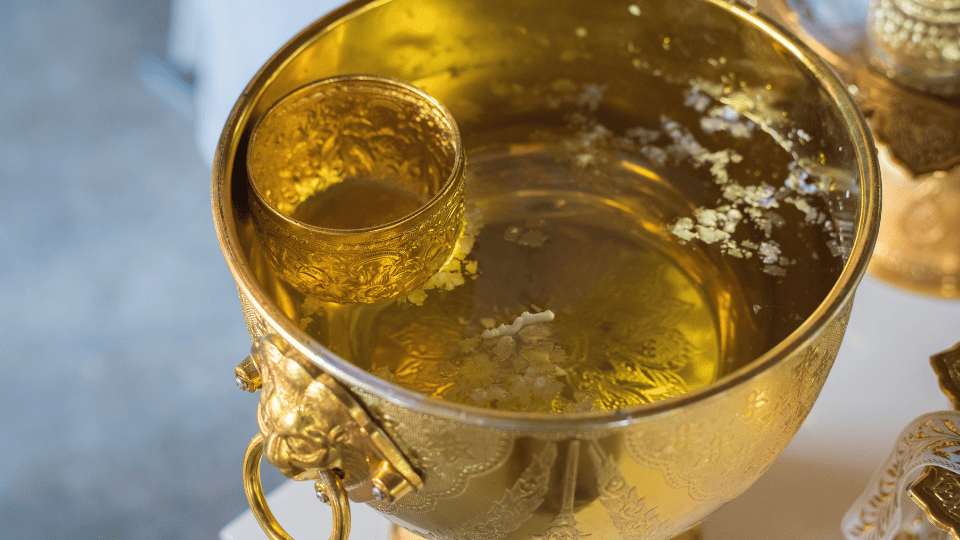
Holy water, commonly referred to as Nam Mon in Thai, is water used in religious or auspicious ceremonies. In a Buddhist context, Nam Phra Phuttha Mon refers to water associated with Buddhist chanting and blessings.
In Thai wedding ceremonies, holy water is associated with receiving blessings, inviting good fortune, and beginning married life with positive intentions.
Some couples include a Buddhist blessing ceremony in which monks chant prayers and may sprinkle holy water on the couple. Other weddings focus on different traditional rituals, depending on the family's religious beliefs and preferences.
It is important to distinguish the sprinkling of holy water from the traditional Thai water-pouring ceremony, known as Rod Nam Sang. Although both are associated with blessings and auspicious beginnings, they are separate ceremonial practices.
The Meaning of Holy Water in Thai Weddings
Holy water carries several symbolic meanings within Thai religious and cultural traditions.
Auspicious beginnings
Holy water is associated with blessings and the hope that the couple's married life will begin with good fortune and happiness.
Spiritual reassurance
For couples and families who value Buddhist traditions, participating in a blessing ceremony can provide a sense of peace and spiritual comfort on an important day.
A fresh beginning
Symbolically, the ceremony can represent the couple's intention to begin a new chapter together with goodwill, mutual respect, and responsibility.
Faith and family traditions
Including holy water in a wedding ceremony allows families to maintain religious practices that have been passed down through generations.
These meanings reflect cultural and religious beliefs rather than a guarantee of future happiness or success in marriage.
2. What Is Sai Sin in a Thai Wedding Ceremony?
Sai Sin is a sacred thread commonly used in Thai Buddhist ceremonies and auspicious rituals. It is typically made from white cotton thread and may be arranged in a continuous loop or connected between different elements of a ceremony.
During Buddhist chanting, Sai Sin may be arranged around a Buddha image or connected to the ceremonial area according to the tradition being observed. In some wedding settings, the thread may also be incorporated into rituals involving the couple, depending on local customs and the family's preferences.
The precise arrangement and use of Sai Sin can vary. Couples should consult the monks or ceremonial practitioners responsible for their wedding to understand the appropriate practices.
The Symbolic Meaning of Sai Sin
1. An element of auspicious Buddhist rituals
Sai Sin is traditionally associated with Buddhist chanting and ceremonies in which blessings are offered.
2. A symbolic connection
When arranged to connect different elements of a ceremony, Sai Sin represents the relationship between the ritual, the participants, and the blessings being invoked.
3. The preservation of Thai traditions
Using Sai Sin allows couples and their families to continue participating in traditional religious practices that hold cultural significance.
4. Faith and spiritual comfort
For families who value Buddhist ceremonies, Sai Sin forms part of a meaningful ritual that brings a sense of reverence and peace to the wedding day.
Its use is not identical in every Thai wedding. The arrangement depends on the ceremony, regional customs, and the guidance of the religious practitioners involved.
3. What Is the Difference Between Holy Water and Sai Sin?
Although holy water and Sai Sin are both associated with Thai Buddhist ceremonies, they serve different purposes. Holy water is linked to blessings and auspicious beginnings, while Sai Sin is a sacred thread used in religious rituals according to Buddhist traditions.
Holy Water: A Symbol of Blessings
Holy water, known in Thai as Nam Mon, is used in religious and auspicious ceremonies. In Thai weddings, it is associated with receiving blessings and beginning married life with positive intentions.
During some Buddhist wedding ceremonies, monks may sprinkle holy water on the couple as part of a blessing ritual. The practice and its meaning depend on the ceremony and family traditions.
Sai Sin: A Sacred Thread in Buddhist Rituals
Sai Sin is traditionally a white thread used during Buddhist ceremonies. It may be arranged around a Buddha image or connected to different elements of the ceremonial setting, depending on the ritual.
In a wedding context, Sai Sin is associated with Buddhist blessings and the religious traditions observed by the couple and their families. Its specific use varies according to the ceremony and local customs.
How Do They Differ in a Thai Wedding?
The main difference is their form and role in the ceremony. Holy water is used as part of certain blessing rituals, while Sai Sin is a thread incorporated into Buddhist ceremonies.
Both may be included in a traditional Thai wedding, but neither is required for every wedding. Couples should consult the monks or ceremonial practitioners to confirm the appropriate arrangements.
It is also important to distinguish the sprinkling of holy water from the traditional Thai water-pouring ceremony, known as Rod Nam Sang. During Rod Nam Sang, family elders and guests pour water over the couple's hands while offering blessings. This is a separate wedding tradition, although both practices may be included in the same celebration.
4. How Are Holy Water and Sai Sin Used in a Thai Wedding?
The order of a Thai wedding ceremony varies according to family traditions, religious practices, and the couple's preferred wedding format. The following steps describe some practices that may be included in a traditional Buddhist wedding celebration.
Step 1: Prepare the Buddhist Ceremony
If the couple wishes to invite Buddhist monks to bless their marriage, the venue and necessary ceremonial items should be prepared in advance.
Depending on the ceremony, preparations may include seating for the monks, offerings, a Buddha image, and other items recommended by the religious practitioners.
Step 2: Buddhist Chanting
The monks perform Buddhist chanting according to the agreed ceremonial order.
Sai Sin may be incorporated into the ceremony in accordance with Buddhist customs. The arrangement and use of the thread should follow the guidance of the monks or the practitioners responsible for the ritual.
For many Thai families, this ceremony is an important part of beginning married life with religious blessings.
Step 3: Sprinkling Holy Water
Some ceremonies include the sprinkling of holy water as part of the Buddhist blessing ritual.
The exact procedure depends on the religious practice being followed. Couples should confirm the details with the monks or ceremony coordinator before the wedding day.
Step 4: Continue With the Traditional Thai Wedding Ceremony
After the Buddhist ceremony, couples may proceed with other wedding traditions, such as the Khan Maak procession, engagement ceremony, ring exchange, or water-pouring ceremony.
Not every wedding follows the same sequence. The schedule should be agreed upon in advance with the family, ceremonial practitioners, and wedding venue.
Step 5: Receive Blessings From Family Elders
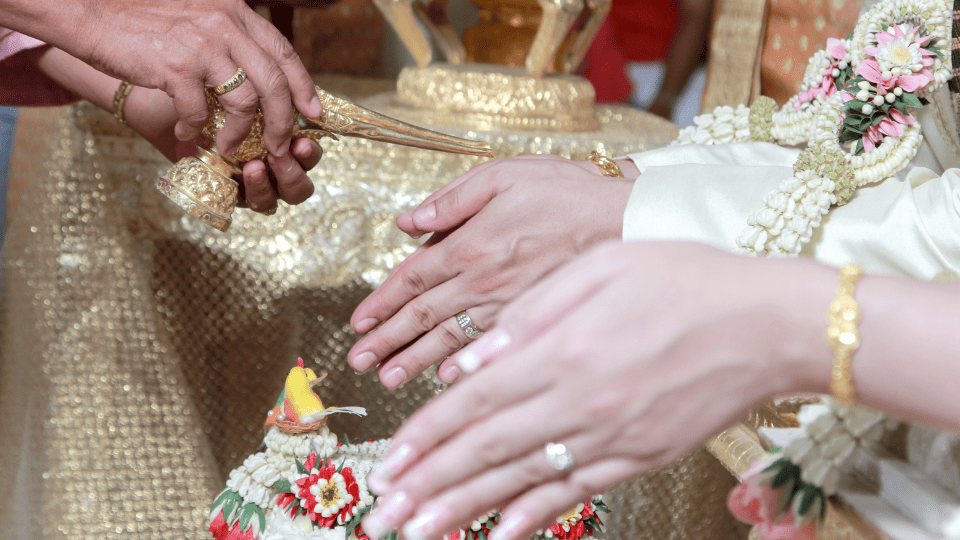
The traditional Thai water-pouring ceremony, known as Rod Nam Sang, gives family elders and guests an opportunity to offer their blessings to the couple.
During this ceremony, water is poured over the couple's hands using a conch shell or another appropriate ceremonial vessel, according to the tradition being observed.
The water-pouring ceremony is distinct from the sprinkling of Buddhist holy water. Both may be included in the same wedding, but they serve different ceremonial purposes.
5. What Should Couples Prepare Before the Ceremony?
Planning a traditional Thai wedding requires coordination between the couple, their families, the religious practitioners, and the wedding venue.
If the couple wishes to include holy water and Sai Sin, the following preparations can help ensure that the ceremony runs smoothly.
Confirm Which Ceremonies to Include
Discuss with both families whether the wedding will include Buddhist chanting, the sprinkling of holy water, the traditional water-pouring ceremony, or other Thai wedding rituals.
Confirming these details early helps prevent misunderstandings about the order and purpose of each ceremony.
Coordinate With the Monks or Ceremonial Practitioners
Ask about the required items, the number of monks, the expected duration, and the appropriate ceremonial arrangements.
Requirements may differ depending on the type of ceremony and the customs being followed.
Inform the Wedding Venue
If the wedding takes place at a hotel or resort, inform the venue's wedding coordinator or Wedding Specialist about the planned Buddhist ceremony.
The venue may need to arrange a suitable space, seating, ceremonial equipment, and a schedule that accommodates the religious proceedings.
Prepare the Necessary Items
Depending on the ceremony, required items may include Sai Sin, a suitable vessel for holy water, seating for the monks, and equipment for the traditional water-pouring ceremony.
Confirm the final checklist with the religious practitioners or wedding coordinator rather than assuming that every ceremony requires the same items.
Choose Appropriate Wedding Attire
The couple and their families should select attire that is respectful of the religious ceremony and comfortable for sitting, kneeling, or participating in the required rituals.
The venue and ceremony coordinator can provide guidance if the couple is unfamiliar with the customs.
6. Thai Wedding Traditions and Important Considerations
Thai wedding customs vary between regions, families, and religious traditions. Understanding these differences helps couples plan a ceremony that is respectful and appropriate for everyone involved.
Respect Religious Customs
When Buddhist monks participate in the wedding, follow their guidance regarding attire, seating arrangements, behavior, and ceremonial procedures.
Keep Ceremonial Items Clean
Water and other items used during the ceremony should be clean and suitable for their intended purpose. This is especially important for items that come into direct contact with the couple or other participants.
Discuss Family Traditions in Advance
Some families observe particular customs relating to auspicious dates, ceremonial sequences, or the use of specific items.
Discussing these preferences before the wedding helps both families understand the planned ceremony and reduces the risk of last-minute changes.
Understand That Customs May Differ
Certain beliefs and restrictions may be specific to particular families or local traditions. Couples should not assume that every custom applies universally to all Thai weddings.
The aim is to create a meaningful ceremony that respects the couple's preferences, family traditions, and religious practices.
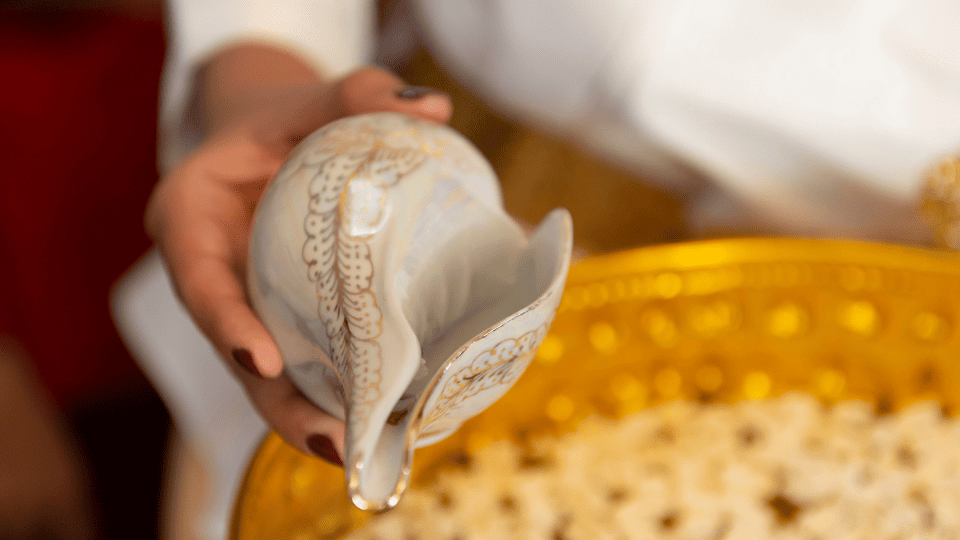
Frequently Asked Questions About Holy Water and Sai Sin in Thai Weddings
What does holy water symbolize in a Thai wedding?
Holy water is associated with blessings, auspicious beginnings, and positive intentions within Thai religious and cultural traditions. Some couples include a Buddhist blessing ceremony as a way to seek blessings for their married life.
What is Sai Sin used for in a Thai wedding ceremony?
Sai Sin is a sacred thread used in Buddhist ceremonies. It may be arranged to connect elements of the ceremonial setting according to traditional practices. Its specific use depends on the ritual and the guidance of the monks or ceremonial practitioners.
Is holy water the same as the traditional Thai water-pouring ceremony?
No. Holy water is associated with Buddhist blessing rituals, while the traditional Thai water-pouring ceremony, or Rod Nam Sang, allows family elders and guests to offer blessings to the couple by pouring water over their hands. The two practices are distinct, although both may be included in the same wedding.
Are holy water and Sai Sin necessary for every Thai wedding?
No. These elements are not mandatory for every Thai wedding. Couples can choose their ceremonial arrangements according to their religious beliefs, family traditions, and personal preferences. Those planning a Buddhist ceremony should consult the monks or practitioners involved.
Can couples have a Buddhist wedding ceremony at a hotel or resort in Thailand?
Some hotels and resorts can accommodate Buddhist wedding ceremonies, but arrangements depend on the venue's facilities, policies, and available space. Couples should discuss their requirements with the venue's Wedding Specialist in advance to confirm what can be arranged.
Should couples prepare Sai Sin and holy water themselves?
It is best to confirm the requirements with the monks, ceremonial practitioners, or wedding coordinator. The necessary items depend on the type of ceremony, and advance coordination helps ensure that the correct items are prepared.
Can international couples include Thai Buddhist traditions in their destination wedding?
International couples can explore incorporating Thai cultural traditions into their destination wedding, subject to the arrangements agreed upon with the religious practitioners and venue. Couples should discuss the meaning of each ritual beforehand and ensure that the ceremony is conducted respectfully.
Plan a Meaningful Thai Wedding With WeddingInThai
Holy water and Sai Sin represent meaningful elements of Thai Buddhist and cultural traditions. For couples planning a traditional Thai wedding or a destination wedding in Thailand, understanding the purpose of each ritual can help them make informed decisions about their ceremony.
Whether the celebration takes place at a beachfront resort, a private villa, or a luxury hotel, thoughtful planning helps bring the couple's preferences, family traditions, and wedding vision together.
Planning a wedding in Thailand?
Explore wedding venues across Thailand and connect directly with Wedding Specialists through WeddingInThai to discuss your preferred ceremony, venue arrangements, and wedding plans.

Discover Your Dream Wedding Venue
Explore our curated collection of hotels, resorts, and wedding venues. Browse wedding packages, photos, and venue details to find the perfect setting for your special day.
Plan Your Wedding with a Wedding Specialist
Share your vision and budget, and our Wedding Specialist will connect you directly with the venue’s wedding team to bring your dream wedding to life.
Related Content

Example of a Pastors Speech for a Wedding Ceremony Vow Ceremony This is a general example that can be adjusted according to the traditions
8 Dec 2024
Explore the most popular wedding food ideas from Thai classics and Chinese banquets to international dishes and buffet stations. Find the perfect catering inspiration with WeddinginThai.
1 Aug 2024

A morning ceremony followed by a luncheon has become a popular format for Thai weddings. This allows couples to complete all traditional
27 Jan 2025

