Words to Avoid When Angry in a Relationship | WeddingInThai
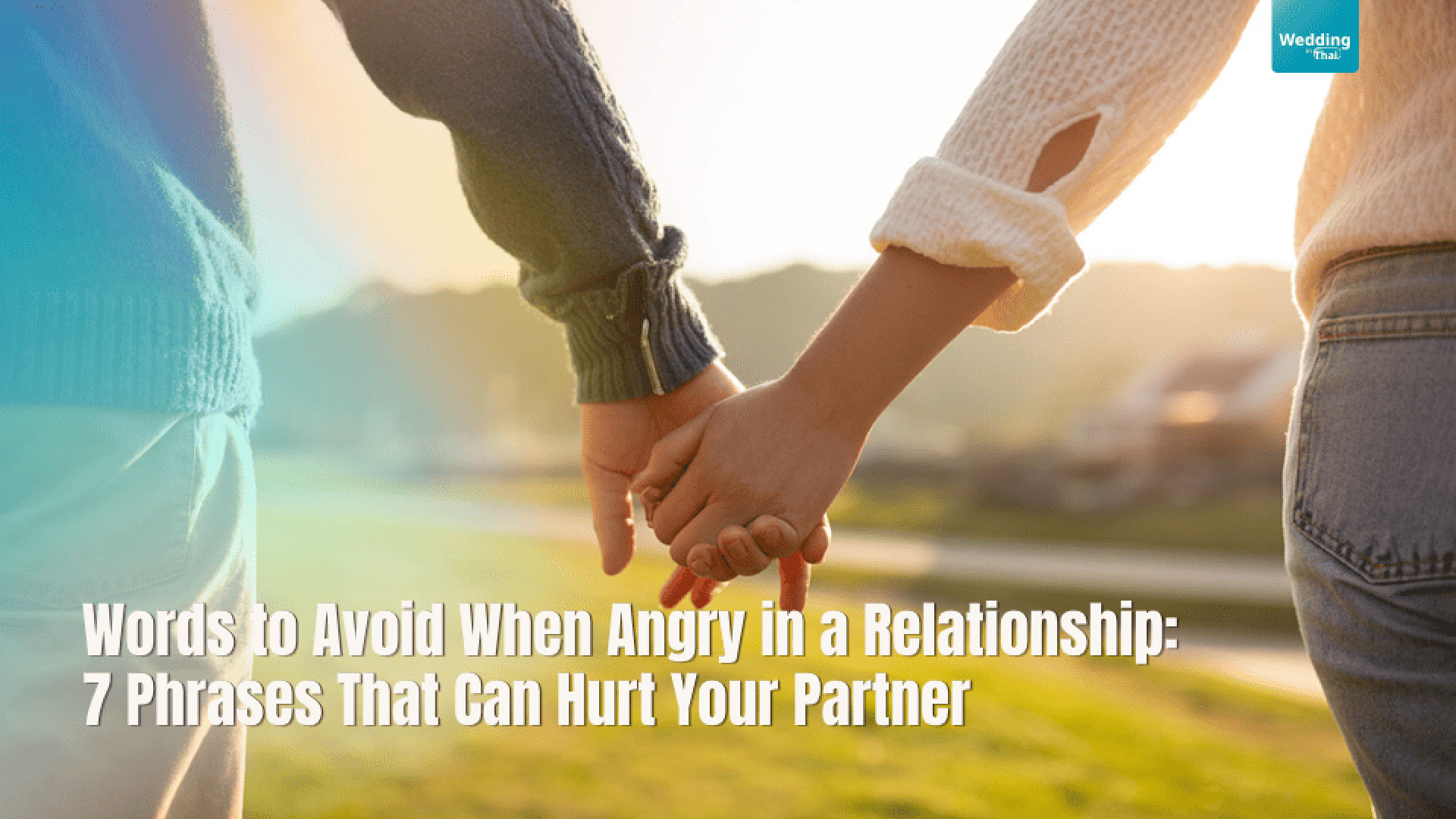
Words to Avoid When Angry in a Relationship: 7 Phrases That Can Hurt Your Partner
Every relationship has disagreements. Even couples who love and understand each other may experience moments of frustration, disappointment, or anger.
However, the words we use during an argument can have a lasting impact on our partner. A disagreement may pass within minutes, but hurtful words can remain in someone's memory long after the conversation ends.
For couples building a future together, healthy communication is an important part of creating a strong and lasting relationship. Learning how to express difficult emotions without hurting each other can help build trust, emotional safety, and mutual understanding.
Here are seven phrases to avoid when angry in a relationship, along with healthier alternatives that can help couples communicate more thoughtfully.
1. "Why Do You Even Think Like That?"
This phrase can make your partner feel that their thoughts and feelings are unreasonable or unworthy of consideration.
People experience situations differently because of their personal experiences, expectations, and emotional needs. You may not agree with your partner's perspective, but dismissing it can make it harder to understand what is really bothering them.
Try saying instead:
"I want to understand why you feel this way. Can you help me understand?"
This approach encourages an open conversation rather than making your partner feel they need to defend their emotions.
2. "It's Not a Big Deal."
Something that seems unimportant to one person may carry a different meaning for another.
When you tell your partner that their concerns are not a big deal, they may feel that their emotions are being dismissed. Over time, repeatedly minimizing a partner's feelings can make them less comfortable sharing their concerns.
You do not have to agree with every reaction to acknowledge that your partner is genuinely upset.
Try saying instead:
"I can see that this matters to you. Can you tell me more about what is upsetting you?"
Acknowledging your partner's feelings creates an opportunity to understand each other, even when you see things differently.
3. "I'm Done Talking."
Sometimes, arguments become overwhelming, and taking a break is the healthiest choice.
However, abruptly ending a conversation without explaining why can leave your partner feeling rejected or uncertain about whether the issue will ever be resolved.
The key difference is between taking time to calm down and using silence to punish or avoid your partner.
Try saying instead:
"I'm feeling overwhelmed right now. Can we take a short break and talk about this again when we're both calmer?"
If you need space, communicate that clearly and, when possible, agree on a time to continue the conversation.
This helps both partners manage their emotions without abandoning the issue.
4. "You Never Do Anything Right."
Words such as "never" and "always" can turn a specific disagreement into a judgment about someone's entire character.
Your partner may become defensive or feel that their efforts are being ignored. Instead of solving the original problem, both of you may end up arguing about past mistakes.
A healthier approach is to describe the specific situation and explain how it affected you.
Try saying instead:
"I felt disappointed about what happened. Can we talk about how to handle this differently next time?"
Focusing on a particular behavior makes it easier to find a practical solution together.
5. "Do Whatever You Want."
This phrase may sound like permission, but during an argument, it can communicate frustration, resentment, or emotional withdrawal.
Your partner may feel that you no longer want to understand their perspective or work toward a solution together.
Even when you disagree, you can express your needs without dismissing the conversation.
Try saying instead:
"We seem to have different perspectives. Can we find a solution that works for both of us?"
Healthy communication does not mean agreeing on everything. It means being willing to listen, explain your position, and work toward a fair outcome.
6. "Stop Being So Dramatic."
Calling your partner dramatic can make them feel embarrassed about expressing their emotions.
It shifts the conversation away from the issue itself and toward whether their feelings are acceptable. This can discourage honest communication, particularly when one partner already finds it difficult to express their needs.
Instead of judging the intensity of their reaction, try to understand what is behind it.
Try saying instead:
"I can see that you're upset. What do you need from me right now?"
You may still need to discuss whether a reaction was appropriate, but that conversation is usually more productive when both partners feel heard and respected.
7. "Maybe We Shouldn't Be Together."
Threatening to end a relationship during an argument can create uncertainty and fear, particularly when it happens repeatedly.
For couples planning a future together, including those preparing for marriage, feeling secure enough to discuss disagreements is important. Partners need to know they can raise difficult issues without every conflict becoming a question about whether the relationship will survive.
If you are overwhelmed, express your feelings without using the relationship itself as leverage.
Try saying instead:
"I'm struggling with this conversation, and I need some time to think. Let's take a break and talk again when we're ready."
If you are genuinely questioning the future of your relationship, that deserves an honest and thoughtful conversation rather than a threat made in anger.
How Can Couples Communicate Better During Arguments?
Knowing which words to avoid is a useful first step. Building healthier communication also requires consistent effort from both partners.
Here are four practical habits couples can develop.
1. Pause Before Responding
When emotions run high, give yourself time to calm down before responding. A short pause can help you choose words that reflect what you really want to communicate.
2. Talk About Feelings Without Blaming
Use statements such as "I felt hurt when..." or "I was worried because..." to explain your experience without attacking your partner's character.
3. Listen to Understand
Give your partner time to explain their perspective. Listening does not mean you must agree; it means you are willing to understand before responding.
4. Return to Difficult Conversations
Taking a break can be helpful, but important issues still need attention. Agree on a reasonable time to revisit the conversation and work toward a solution together.
Both partners should be able to express their feelings, set boundaries, and disagree without intimidation or humiliation. If arguments repeatedly involve threats, controlling behavior, or emotional abuse, consider seeking support from a qualified professional.
Why Healthy Communication Matters Before Marriage
Planning a wedding is an exciting milestone, but building a marriage involves more than choosing a venue, setting a date, or preparing a celebration.
Couples also need to understand how they handle disagreements, communicate their expectations, and support each other through stressful situations.
Wedding planning itself can involve decisions about budgets, guest lists, family expectations, and different ideas about the wedding day. These situations offer opportunities to practice listening, compromise, and respectful communication.
Learning to discuss difficult topics before marriage can help couples develop a stronger foundation for their life together.
A healthy relationship does not require two people to agree on everything. It requires both partners to treat each other with respect, take responsibility for their words, and remain willing to work through challenges together.
Anger is a natural emotion, and disagreements are a normal part of many relationships. What matters is how couples respond when emotions become difficult to manage.
Avoiding hurtful phrases does not mean hiding your feelings or pretending that everything is fine. It means expressing frustration honestly without deliberately diminishing your partner's dignity or emotional needs.
Sometimes, a simple change in wording can open the door to a more meaningful conversation.
As you build your future together, remember that a lasting relationship is shaped not only by the happy moments you share, but also by how you treat each other when things become difficult.
At WeddingInThai, we believe that every love story deserves a thoughtful beginning and a future built on mutual understanding, respect, and care.
Frequently Asked Questions
What words should you avoid when angry in a relationship?
Avoid phrases that dismiss feelings, attack someone's character, or threaten the relationship, such as "It's not a big deal," "You never do anything right," and "Maybe we shouldn't be together." Express your feelings clearly without humiliating or blaming your partner.
How can couples communicate better during an argument?
Pause when emotions become overwhelming, listen to each other's perspectives, explain feelings without personal attacks, and return to the discussion when both partners are ready. The goal is to understand the problem and find a constructive solution.
Is it healthy to take a break during an argument?
Yes. Taking a break can help both partners calm down and think more clearly. It is helpful to explain why you need space and agree on when to continue the conversation, rather than using silence to punish your partner.
Why is communication important before marriage?
Healthy communication helps couples discuss expectations, manage disagreements, make decisions together, and navigate stressful situations such as wedding planning. These skills can support a stronger foundation for married life.


Discover Your Dream Wedding Venue
Explore our curated collection of hotels, resorts, and wedding venues. Browse wedding packages, photos, and venue details to find the perfect setting for your special day.
Plan Your Wedding with a Wedding Specialist
Share your vision and budget, and our Wedding Specialist will connect you directly with the venue’s wedding team to bring your dream wedding to life.
Plan with a Wedding Specialist