Meaning and Beliefs of Holy Water and Sai Sin in Thai Wedding Ceremonies
Last updated: 15 Feb 2026
1472 Views
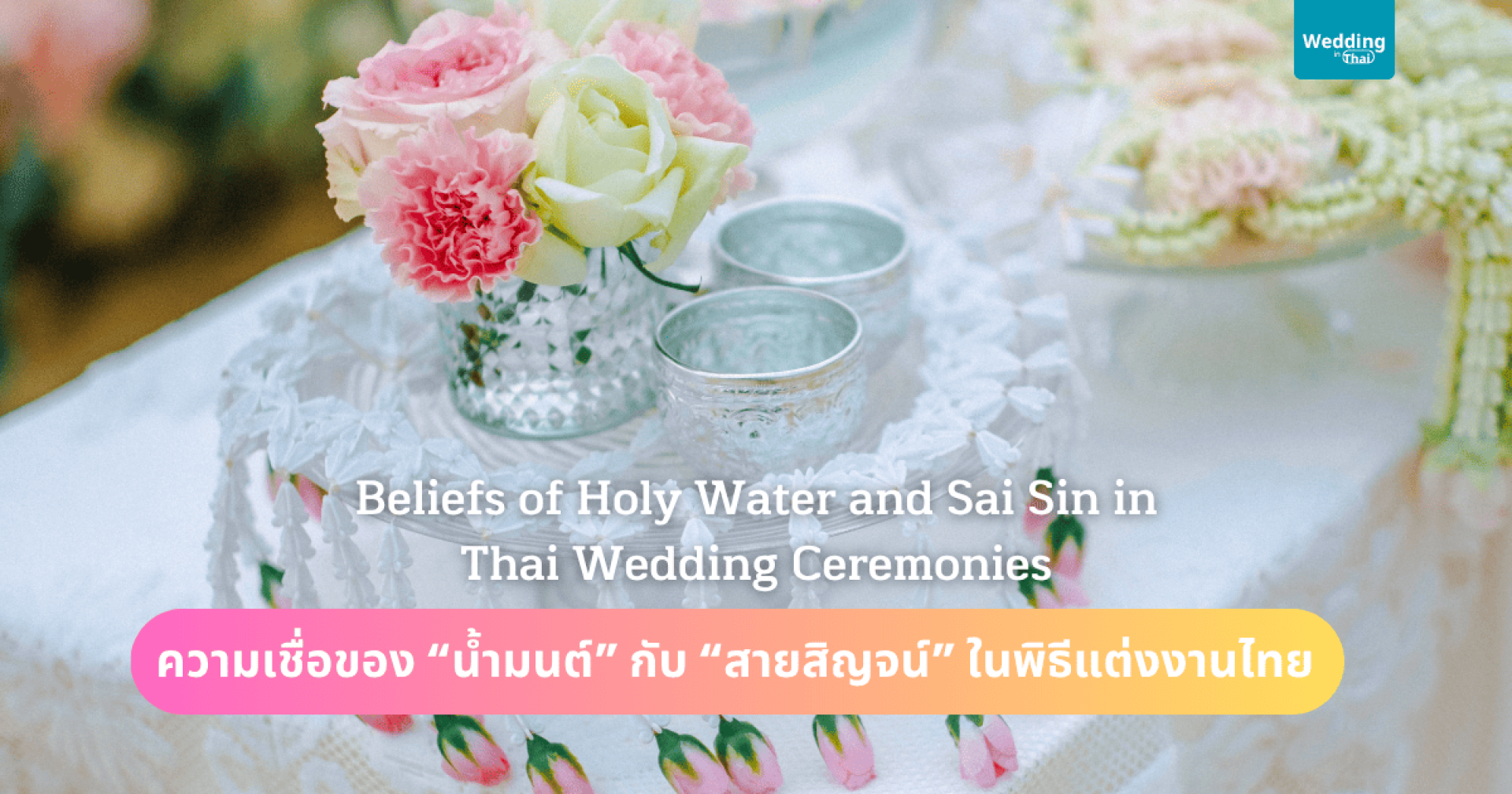
Thai wedding ceremonies combine love, family responsibility, and cultural beliefs. Two widely seen and meaningful elements are holy water (nam mon) and sai sin (sacred thread). These are not mere rituals; they are powerful symbols intended to bless the couple, protect them, and tie them to family and sacred traditions.
Holy water purity and blessing
Sai sin connection, bond, and protection.
Holy Water Origins and Meaning
- Holy water is water blessed or consecrated by monks or a ritual specialist. It’s believed to carry sacred power that wards off negativity and bestows blessings.
- Rooted in Buddhist practices mixed with local animist customs, water blessing rituals are a long-standing tradition to ask for protection and a good start for the married life.
- Sprinkling holy water represents cleansing, forgiveness, and the granting of good fortune to the newlyweds.
- Sai sin is a sacred thread (often white) used in ceremonies. It’s looped around heads, wrists, or between people while prayers are chanted.
- Sai sin symbolizes connection between couple, family, officiants, and sacred energies. It’s thought to hold protective power and to bind blessings to the couple.
- Sai sin may be placed on the head, tied around wrists, or connected between the couple and the officiant depending on local custom.
- Inviting monks / officiant Chanting and making merit begins the ceremony.
- Consecrating the holy water Monks or the ritual leader chant and bless water to be used for sprinkling.
- Using holy water The blessed water is sprinkled on the couple (or used in ceremonial bowls).
- Additional blessings Family elders or guests may give personal words of advice and gifts.
- Conclusion Final chants and receiving of merit conclude the ritual.
Note: Sequence can vary depending on local customs and venue arrangements.
Beliefs and Symbolic Explanations
- Holy water start anew: It represents cleansing from past misfortune and opening to a future of positive fortune.
- Sai sin relational bond and support: It acts as a physical symbol binding the couple to blessings, family intention, and community support.
- Chanting connects blessing to action: The spoken rituals are believed to direct sacred energy and make the blessings effective.
Related Content
Explore the auspicious symbols hidden in the small details of Thai wedding ceremonies — from jasmine and holy water to thread, colors, seating, and offerings
17 Nov 2025
Practical feng shui tips for arranging the registration table, ceremony stage, and event spaces at wedding venues to enhance love, stability, and good fortune. Learn placement, directions, color, lighting, materials, and a ready-to-use pre-event checklist
8 Nov 2025

Comprehensive checklist of essential items for a traditional Thai wedding, including offerings, monk food, flowers, Khan Mak, accessories, and other ceremony essentials to ensure a smooth and complete event.
6 Nov 2025

